
Singapore: As she campaigns across Japan, its clear the Sanae Takaichi effect is in full flight. After years of Japanese elite politics being defined by po-faced men, Takaichi is a beaming, dynamic break from the past.
Her campaign posters show her smiling with her hand outstretched, as though beckoning voters to join her – a stark contrast with the stern headshots of the dynastic male leaders who have defined Japanese politics for decades.
Her gregariousness offers a counterbalance to her staunchly conservative views on a whole range of issues from national security and defence, immigration and women’s rights. And it seems to be broadening her appeal.
“This projection of friendliness and strength is really working,” says Dr Jeffrey Hall, a Japanese politics expert at Kanda University of International Studies.
“There has been a creation of almost a fan culture around Takaichi, where people treat her like a celebrity or an idol, and they are really just focused on her personally, rather than the politics that she represents.
In particular, Takaichi is resonating with younger voters – a notoriously hard-to-reach cohort who could be expected to be turned off by her old-fashion values. Instead, some polls have her support levels at nearly 90 per cent in the 18-29 age group.
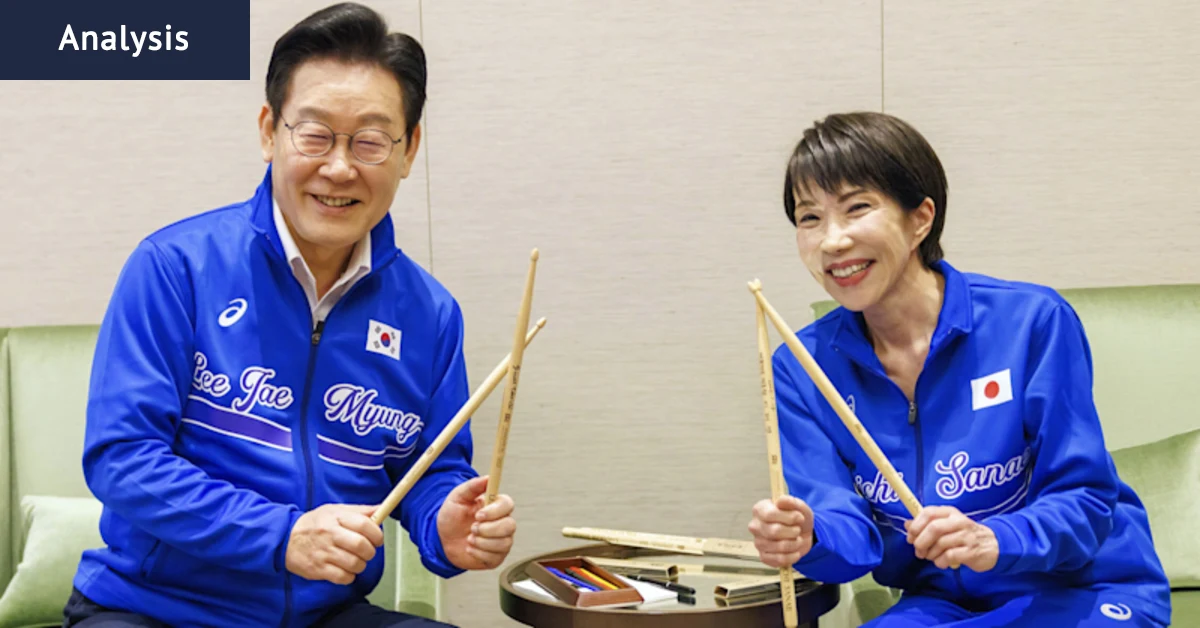
Takaichi’s media savviness has won plaudits among the online generations, where videos of her drumming K-pop songs with South Korea’s president Lee Jae Myung have gone viral. Her signature black tote handbag and pink pen have sold out as people have rushed to copy her style.
On Sunday, Takaichi will find out if her great election gamble on her popularity has paid off.
Takaichi called a snap lower house election on January 23, just three months after becoming prime minister, and set the vote for February 8 – the shortest campaign window in Japan’s postwar history.
It’s an election motivated by politics above policy, and one goal in particular: strengthening her grip on power by winning back her Liberal Democratic Party’s majority in the parliament. In both houses, the party’s dominance had been frittered away by her male predecessors who failed to stop voters’ retreat after years of political financing scandals plagued the LDP.
The party is still on the nose, with support hovering around 30 per cent, meaning Takaichi is banking on her personal approval ratings to drag her team across the line.
A new mandate will free her to pursue her Abenomics agenda of big spending – channelling her mentor, the late prime minister Shinzo Abe – coupled with tax cuts.
She is pitching this approach, dubbed Sanaenomics, as “an entirely new set of economic and fiscal policies” and banking on it to boost growth and wages, which have been stagnant for two decades.
This includes rolling out a 21.3 trillion yen ($195 billion) stimulus package at a time when Japan already has the world’s highest public debt-to-GDP ratio in the world.
It has markets and foreign investors jittery.
A core part of Takaichi’s personal appeal is that she is not from central casting.
Takaichi currently governs through a razor-thin coalition majority with the LDP’s junior partner, the Japan Innovation Party.
There were early signs that voters saw her election gambit as a cynical power grab, with her approval ratings of 70 per cent taking a dip after she dissolved the parliament.
But on Monday, a major poll by Japanese newspaper Asahi Shimbun of 370,000 respondents put her ruling Coalition on track for a landslide victory.
Together with its coalition partner, the LDP is in reach of winning more than 300 seats, while the LDP itself could secure a standalone majority.
“If Takaichi gets this majority on her own, it would be a tremendous victory for her, a tremendous turnaround for the LDP, which has been in decline in recent years, and it would put her down in history as this very politically successful first female prime minister,” Hall said.
A bid by Japan’s main opposition forces to unite and form a new party, called The Centrist Reform Alliance, to take on Takaichi’s government appears to be floundering, with more than half of its 167 seats at risk.
“[The] poll suggests that every factor that needed to break in Takaichi’s favour is in fact breaking in her favour,” Tobias Harris, who runs Japan Foresight, a political risk advisory firm, said in a note to subscribers this week.
However, there are still some variables that could constrain the size of the LDP’s victory, including the weather. It’s rare for a Japanese election to be held in the middle of winter, and snow is projected to fall across the country on Sunday.
“That means that voter turnout is going to be tricky,” said Kenneth McElwain, a politics professor at the University of Tokyo.
“In most of the major newspaper surveys, 40 to 50 per cent of voters said they have not made up their minds. These are the conditions under which weather can make a difference.”
A core part of Takaichi’s personal appeal is that she is not from central casting. She grew up in a middle-class home and is not a hereditary MP like many of her LDP colleagues who hail from dynastic political families. Instead, the one-time drummer in a metal band climbed her way up through the party ranks, firming her image as a self-made woman.
She has also softened her hard-nosed conservatism with a quirky approachability, particularly on the world stage.
In her few short months as prime minister – a role she narrowly won in an internal ballot after then-leader Shigeru Ishiba stepped down – she has hosted an array of world leaders with a distinctive, headline-grabbing flair.
In addition to drumming with South Korea’s leader, she sang happy birthday to Italian Prime Minister Giorgia Meloni and took selfies with her, gave UK prime minister Keir Starmer gifts for Number 10’s resident “chief mouser” Larry, and appealed to US President Donald Trump’s golfing penchant with gifts of clubs owned by Shinzo Abe.
There are also signs that her ongoing feud with China, triggered by her comments suggesting Japan could intervene in a conflict over Taiwan, has bolstered her support domestically, positioning her as leader prepared to take on a bullying neighbour.
But beyond the highly orchestrated diplomatic viral moments, Takaichi’s governing chops have barely been tested due to her short time at the helm.
Faced with a struggling economy, a feeble yen and voters stressed by rising food and energy costs, she has pledged to suspend the 8 per cent consumption tax rate on food products for two years without outlining a plan to make up the 5 trillion yen ($45.8 billion) in lost revenue.
Other major parties are also proposing to slash or cut the tax entirely. This sent Japanese government bond yields surging to record highs last month as investors baulked at the debt required to fund it.
A year from now, Japanese voters might not be so rosy on Sanaenomics. The question is how willing they will be on Sunday to take that bet and decisively hand her the reins.
Get a note directly from our foreign correspondents on what’s making headlines around the world. Sign up for our weekly What in the World newsletter.
 Lisa Visentin is the North Asia correspondent for The Sydney Morning Herald and The Age. She was previously a federal political reporter based in Canberra.Connect via X or email.