
The political machine behind Sacramento: over 1.1 million members and nearly $1 billion in annual revenue. These aren’t advocacy groups—they’re the most powerful special interest in California. Data: California Policy Center
California’s public-sector unions are the Colorado River of political spending. Normal people and our donations? A trickle. An unstoppable torrent flows from over 1.1 million union members collecting nearly $1 billion a year in dues. If you wonder how California politics got so bad, this is how.
California’s public-sector unions spend 100s of millions of $ yearly on elections and lobbying
Opposition from citizens? Normal people and our donations? A trickle. The unions are the Colorado River. An unstoppable torrent
If you wonder how CA politics got so bad, this is how https://t.co/9tPIdPGPLA
The Numbers Don’t Lie: $921 Million in Annual Union Revenue
The California Policy Center’s analysis lays it bare: California’s public sector unions collected $921 million in 2018 alone. That’s not campaign contributions—that’s annual revenue. The prize they’re protecting? According to Govern For California, state and local governments spend $240 billion per year on public employee compensation and benefits.
The California Teachers Association alone has 325,000 members and $356 million in annual revenue. Unlike private sector unions that negotiate with management controlled by shareholders, public sector unions can elect their own management—the politicians who depend on union endorsements. That’s not collective bargaining. That’s a protection racket.
They’re Coming for the Golden Goose
It’s a very bad thing for California to be the innovation center of the world and Golden Goose of the state while simultaneously the biggest, most powerful special interests want to destroy it.
Unions oppose progress and are antithetical to Silicon Valley’s startup ethos.
In this case, the Teamsters demand Waymo’s license be pulled after an apparently unavoidable and relatively minor safety incident. https://t.co/HTkDwlaFOs https://t.co/g3UgIYg6M8
[Quoting @TeamstersCA]:
Teamsters California co-chairs Peter Finn, Victor Mineros demanded Waymo’s operating license be suspended indefinitely – citing an incident where a Waymo struck a 5-year-old outside a school in Santa Monica last week.https://t.co/LdLh4PEltO
The Teamsters demanded Waymo’s license be suspended indefinitely after a child ran into the road from behind a tall SUV. The vehicle braked hard from 17 mph to 6 mph. The child stood up immediately, walked to the sidewalk, and was fine. The Teamsters’ response? Shut it all down.
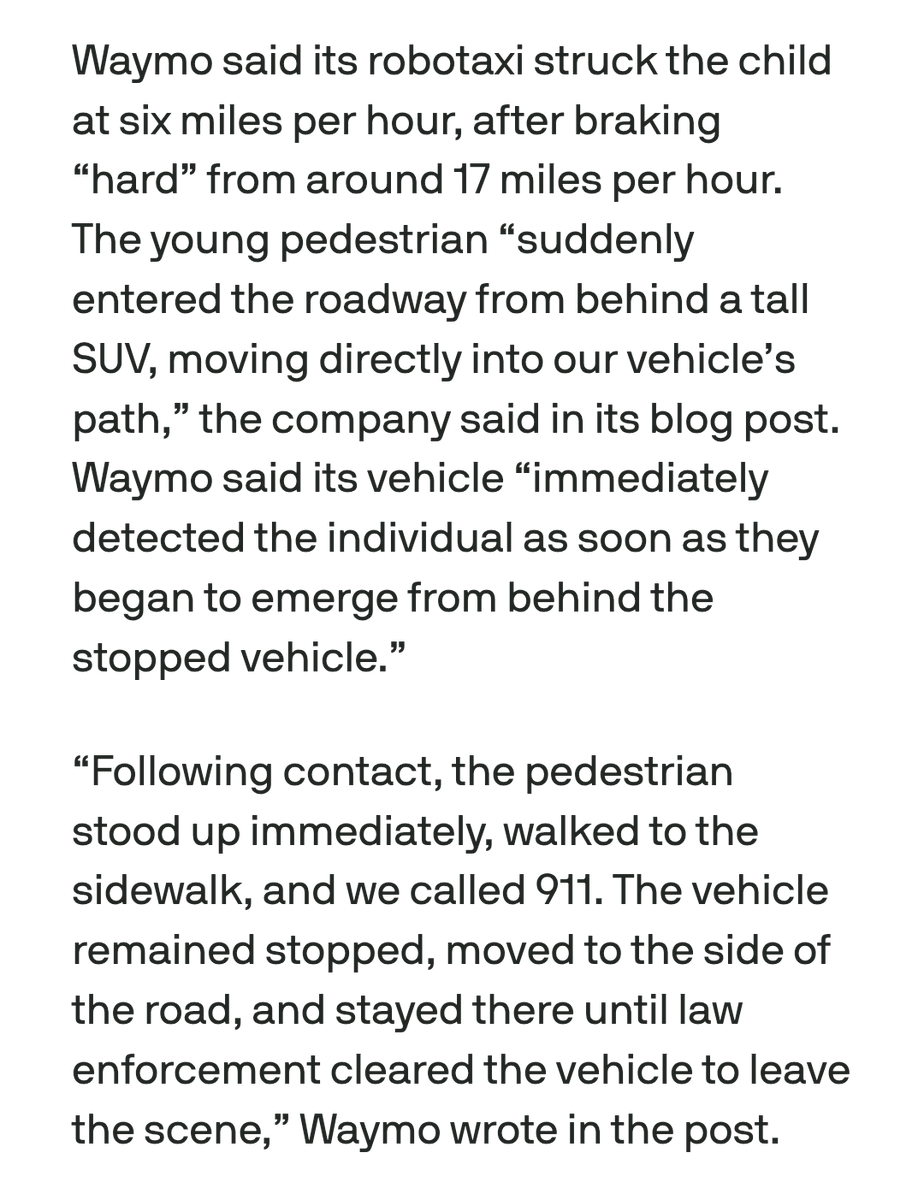
This is the same pattern we see everywhere: use any excuse to kill innovation that threatens union jobs. The Teamsters also control SFO and are fighting against Waymo access there. Marc Joffe put it bluntly: “Unions oppose progress and are antithetical to Silicon Valley’s startup ethos.”
Not All Unions Are the Enemy
Here’s what most people miss: not all unions are the problem. Some have figured out that you can support workers AND progress.
The California Conference of Carpenters has become one of the most influential pro-housing voices in Sacramento. When Governor Newsom signed landmark housing reform last year, he said: “This is the third of the last four years we’ve been together signing landmark housing reforms, and it simply would not have happened without the Carpenters.”

The Carpenters focus on organizing non-union workers and improving conditions rather than just protecting existing members. Assemblymember Buffy Wicks said it best: “The Carpenters have come to the table with more creative solutions.”
And the SF Police Officers Association routinely fights for public safety for everyone. POA President Louis Wong advocates for “the rank-and-file officers who keep this city safe.” They’re allies in the fight for accountability—not obstacles.
The Real Fight: Public Sector vs. Private Sector Unions
The distinction that matters isn’t union vs. non-union. It’s public sector vs. private sector.
Private sector unions negotiate with management controlled by shareholders who have real stakes. Public sector unions can literally elect their own management—politicians who depend on union endorsements and campaign contributions. This creates a fundamental imbalance with no natural check on union demands.
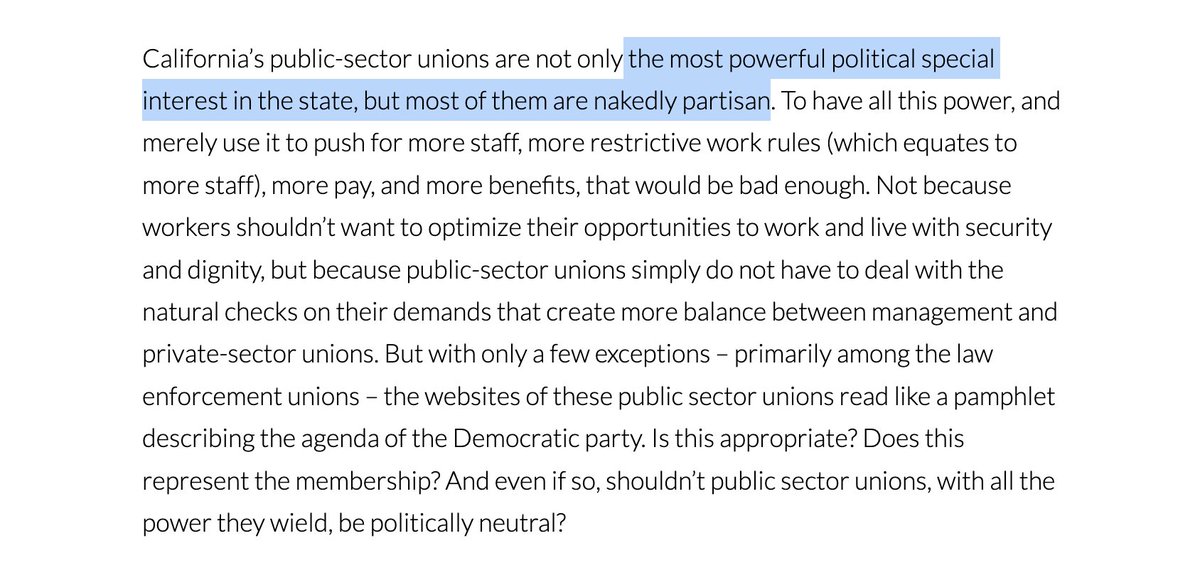
The result? Services have declined ever since California authorized public employee collective bargaining in 1968, even as taxes have increased. Most public sector union websites “read like a pamphlet describing the agenda of the Democratic party.” Is that appropriate for organizations with this much power?
You might ask why? This is why. 9 figures of $ seems like a lot, but it’s a drop in the bucket for $240B per year in spending that is a firehose to the public sector unions.
There needs to be balance.
But we are so out of balance.
https://t.co/rHsShjokUd https://t.co/WSDdFQOBP7
Nine figures of political spending seems like a lot. But it’s a drop in the bucket for unions protecting $240 billion per year in spending that flows directly to them.
The Janus Opportunity
There’s a legal pathway out of this mess.
The 2018 Janus Supreme Court decision found that applying public sector union fees to non-members violates the First Amendment. The California Policy Center has been working to inform public employees of their right to withdraw. Marc Joffe noted: “This is an important opportunity to educate individuals who have been in the Democratic Party coalition.”
There needs to be balance. But we are so out of balance.
I think there’s a pathway via ballot measure to require unions to be real democracies—with leadership elections, term limits, and open audited books. If they refuse? Right-to-work laws trigger. Wisconsin did it. California could too.
California is the innovation center of the world. The birthplace of self-driving cars, the original home of OpenAI, and countless technologies that improve human life. But the biggest special interests in the state want to kill the golden goose. The Teamsters want to ban autonomous vehicles. The teachers unions block school accountability. SEIU and AFSCME control Sacramento.
The Carpenters proved you can support workers AND housing. The POA fights for public safety. The distinction is public sector vs. private sector—and whether unions use their power to block progress or build it.
The Janus decision cracked open the door. Now it’s time to walk through it.