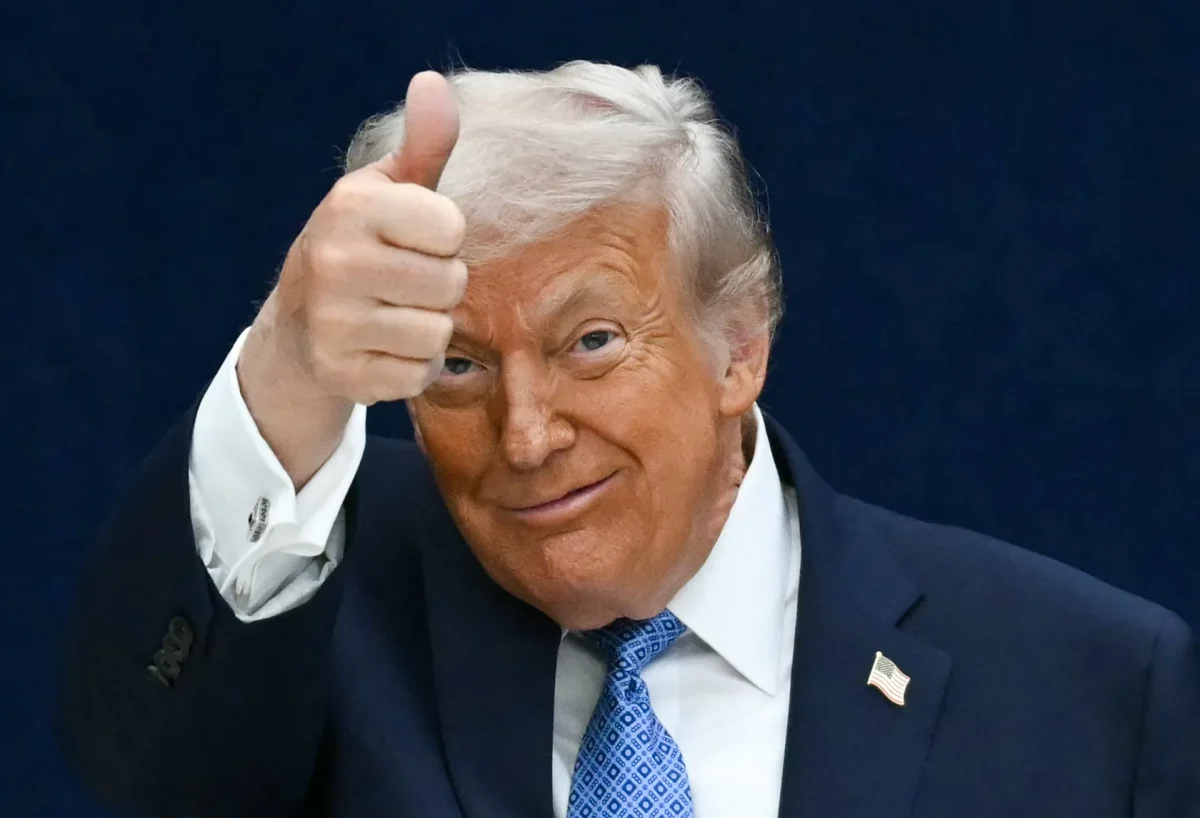
Unlike his 46 predecessors, Donald Trump’s political career began with a direct bid for the presidency rather than through a progression of elected or appointed offices. His political trajectory and election as President of the United States were unprecedented. Without a track record in politics, his first term was, by definition, a foray into the ways of Washington and the conduct of international affairs. The successes of his first term enabled him to master the intricacies of American governance and prepared him for his second, which places greater emphasis on foreign policy.
One year after his second election, President Trump’s foreign policy doctrine has reshaped the global order and redirected America’s role in the world at lightning speed, from defence alliances to resource security strategy. Critics dismiss the Trump Doctrine as nothing more than a chaotic combination of isolationism, dismantlement of multilateralism, and imperialism. Yet the reality is quite the opposite. President Trump’s vision is methodical and strategically results-driven. Although unorthodox, Trump’s bold and sometimes deliberately provocative pronouncements unnerve adversaries, often leading to concessions and desired outcomes. Whether friend or foe, America-first interests define his agenda and tactics. He aptly practises the “art of the deal” to achieve his goals. Nowhere is this strategy clearer than in Greenland. Trump threatened an invasion, a maximalist bargaining position, if Denmark refused to cede the island, which he deems vital to US security. The result: an agreement in which Denmark and the US will greatly increase their joint military footprint and open investment almost exclusively to the United States while excluding Chinese and Russian encroachment. Mission accomplished: enhanced US strategic access while reinforcing Western security architecture. Trump believes that by placing American interests first, the free world will also benefit, prosper and be more secure. Trump argues that prioritising American strength ultimately stabilises and secures the broader democratic alliance.
To accomplish his objectives, Trump has discarded what he sees as the role of the United Nations and argues that the 80-year-old organisation is at best ineffective and at worst a forum for anti-Americanism and left-wing activism, frequently paralysed by veto politics and incapable of enforcing meaningful accountability. Instead, his approach is bilateral or regional, reflecting a doctrine that prioritises direct power relationships over multilateral consensus. Regional alliances, such as the North Atlantic Treaty Organization (NATO), have been redefined by Trump’s insistence on collective engagement and greater contributions by member states, rebalancing alliance obligations to strengthen deterrence while reducing US overextension. Wealthy allies in Europe and Asia will now shoulder more of the financial burden for their own defence. At its core, the Trump Doctrine rests on two strategic pillars designed to secure peace through strength and prosperity through leverage. First, enhanced American military strength through a proposed doubling of the defence budget to 6 percent of the United States’ Gross Domestic Product (GDP), aimed at restoring overwhelming military deterrence in an era of great power competition. Second, the promotion of investment and equitable free trade. Trade and tariffs are instruments used by Trump not only to achieve equitable trade agreements but also as strategic tools designed to shape global behaviour and advance foreign policy objectives, ranging from curtailing Russian oil purchases in support of Ukraine to combating the global illicit drug trade, demonstrating Trump’s belief that economic leverage can be as decisive as military strength in shaping global outcomes.
In no region of the world has Trump invested more energy and political capital than the Middle East, which has become a central arena for his foreign policy approach. The Trump Doctrine has reaffirmed and strengthened the American-Israeli relationship while expanding the United States’ historic ties to Arab allies through the Abraham Accords that Trump championed in his first term, positioning them as a framework for broader regional cooperation. President Biden labelled Saudi Arabia a “pariah state”; Trump, in turn, considers the Kingdom a pivotal ally and a cornerstone of regional stability. Trump’s sway with Arab allies, including Egypt, Saudi Arabia, Jordan, Qatar, and the United Arab Emirates, was instrumental in achieving a ceasefire in Gaza, using regional alliances to advance negotiations. Trump’s vision for the Middle East is largely based on a philosophy that prosperity and opportunity, particularly for the Palestinians, is the cornerstone to achieve peace. Hence, his references to the development of Gaza and investments to make it prosperous. Trump’s 20-point, three-phase Gaza peace plan and Peace Council seek to balance Palestinian self-rule with Israeli security requirements. By marshaling the resources and commitments of Turkey and key Arab allies in the region, Trump is prepared to take calculated gambles to resolve the long-festering Israeli-Palestinian conflict, applying similar regional coalition-building efforts, just as he has done with the warring parties in Syria and with his support of the Sharaa-led government. Where Trump draws a red line is with respect to Iran. The Trump Administration subscribes to the view that most of the instability in the region is attributable to the Iranian regime’s meddling and support of terrorism and Iranian proxies in Yemen, Gaza, and Lebanon. Beyond being a state sponsor of terrorism, Iran’s nuclear ambitions also pose a global threat and, if successful, would serve to impose Iran’s hegemony over the entire region. Whether by military force or through a verifiable negotiated agreement, Trump is determined to conclusively end the Iranian threat, seeking to contain or dismantle Iran’s strategic capabilities for the long term. Trump is the first American President to strike Iran and is prepared to do so again. With Iran’s containment or with regime change through internal revolution supported by the United States, Trump would have much more leeway to press for a Palestinian state and the necessary security arrangements for both Israel and the Palestinians. In Trump’s vision, the guarantors of such a peace would be the United States and a cadre of Arab leaders representing an expanded Abraham Accords roster that would include Saudi Arabia, Qatar, Syria, and Lebanon, alongside other Arab states committed to regional security cooperation.
It is essential to consider the Trump Administration’s global foreign policy achievements and objectives through a broad lens, recognising them as part of a deliberate and coherent strategic doctrine. The Trump Doctrine’s principles are anchored in an unprecedented expansion of national defence, the pursuit of fair and equitable trade, and steadfast support for American allies. Unorthodox as Trump’s approach may be, its outcomes, according to its supporters, have demonstrated tangible strategic gains. In many respects, Donald Trump is portrayed as a 21st century Theodore Roosevelt, a leader willing to project strength to secure national interests. Both Presidents put America First and carried a big stick, prioritising national power as the foundation of global influence and stability.
The views expressed in this article are the author’s own and do not necessarily reflect Al Jazeera’s editorial stance.