
These two habits are linked to more than a third of all cancer cases
More than one-third of cancer cases are preventable, a massive study finds
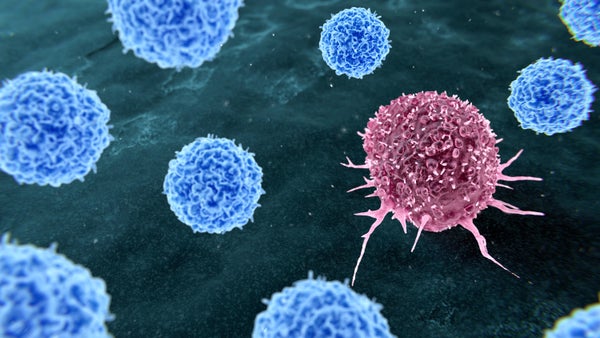
Thom Leach/Science Photo Library/Getty Images
Nearly 40% of new cancer cases worldwide are potentially preventable, according to one of the first investigations of its kind, which analysed dozens of cancer types in almost 200 countries.
The study found that in 2022, roughly seven million cancer diagnoses were linked to modifiable risk factors — those that can be changed, controlled or managed to reduce the likelihood of developing the disease. Overall, tobacco smoking was the leading contributor to worldwide cancer cases, followed by infections and drinking alcohol. The findings suggest that avoiding such risk factors is “one of the most powerful ways that we can potentially reduce the future cancer burden”, says study co-author Hanna Fink, a cancer epidemiologist at the World Health Organization’s International Agency for Research on Cancer in Lyon, France.
The study was published today in Nature Medicine.
On supporting science journalism
If you’re enjoying this article, consider supporting our award-winning journalism by subscribing. By purchasing a subscription you are helping to ensure the future of impactful stories about the discoveries and ideas shaping our world today.
Troubling trend
Cancer continues to be a leading cause of illness and death worldwide, with cases expected to rise over the next decades if current trends continue. Previous studies have estimated that around 44% of global cancer deaths can be attributed to avoidable or controllable causes. Estimates of preventability have mainly focused on the number of deaths rather than cases and have mostly investigated a single risk factor, says Fink.
To address this gap, Fink and her colleagues examined global case data from 2022 for 36 different cancers across 185 countries. The study included 30 modifiable risk factors that are well-established causes of cancer — such as tobacco smoking, alcohol consumption and infections.
The researchers combined this information with data from 2012 that captured people’s exposure to each risk factor. Fink and her colleagues then estimated the proportion of cases that were directly linked to each risk factor.
Drinking and smoking
In 2022, there were a total of 18.7 million new cancer cases worldwide. Roughly 38% — or 7.1 million — of these cases could be attributed to avoidable causes. Globally, tobacco smoking was the leading contributor, accounting for around 15% of preventable cases. This was followed by infections (10%) and drinking alcohol (3%). Lung, stomach and cervical cancers made up nearly half of all preventable cancer cases.
Around 30% of the 9.2 million new cases in women were preventable. More than 11% of these were associated with infections, such as those caused by human papillomavirus (HPV) — the leading cause of cervical cancer. Most of these cases occurred in low- and middle-income regions, such as sub-Saharan Africa, where cervical cancer rates are highest. Meanwhile, smoking was the dominant cause of cancer among women in high-income regions, including North America and most of Europe.
Globally, smoking was the biggest risk factor for men, accounting for almost one-quarter of the 4.3 million preventable cancer cases. It remained the leading cause of cancer in men living in both low- and high-income regions. Infections ranked second — mostly occurring in parts of Africa, Asia and South America — followed by drinking alcohol.
The study is a “fine piece of work” that signals the need to double down on cancer control efforts, says David Whiteman, a medical epidemiologist at the QIMR Berghofer Medical Research Institute in Brisbane, Australia. He adds that the comprehensive data set will make it easier for researchers to make reliable comparisons between regions.
Fink hopes the findings will be used to develop cancer-prevention strategies on the basis of the biggest risk factors in different regions for men and women. “It’s not a one-size-fits-all approach,” she says.
This article is reproduced with permission and was first published on February 3, 2026.
It’s Time to Stand Up for Science
If you enjoyed this article, I’d like to ask for your support. Scientific American has served as an advocate for science and industry for 180 years, and right now may be the most critical moment in that two-century history.
I’ve been a Scientific American subscriber since I was 12 years old, and it helped shape the way I look at the world. SciAm always educates and delights me, and inspires a sense of awe for our vast, beautiful universe. I hope it does that for you, too.
If you subscribe to Scientific American, you help ensure that our coverage is centered on meaningful research and discovery; that we have the resources to report on the decisions that threaten labs across the U.S.; and that we support both budding and working scientists at a time when the value of science itself too often goes unrecognized.
In return, you get essential news, captivating podcasts, brilliant infographics, can’t-miss newsletters, must-watch videos, challenging games, and the science world’s best writing and reporting. You can even gift someone a subscription.
There has never been a more important time for us to stand up and show why science matters. I hope you’ll support us in that mission.