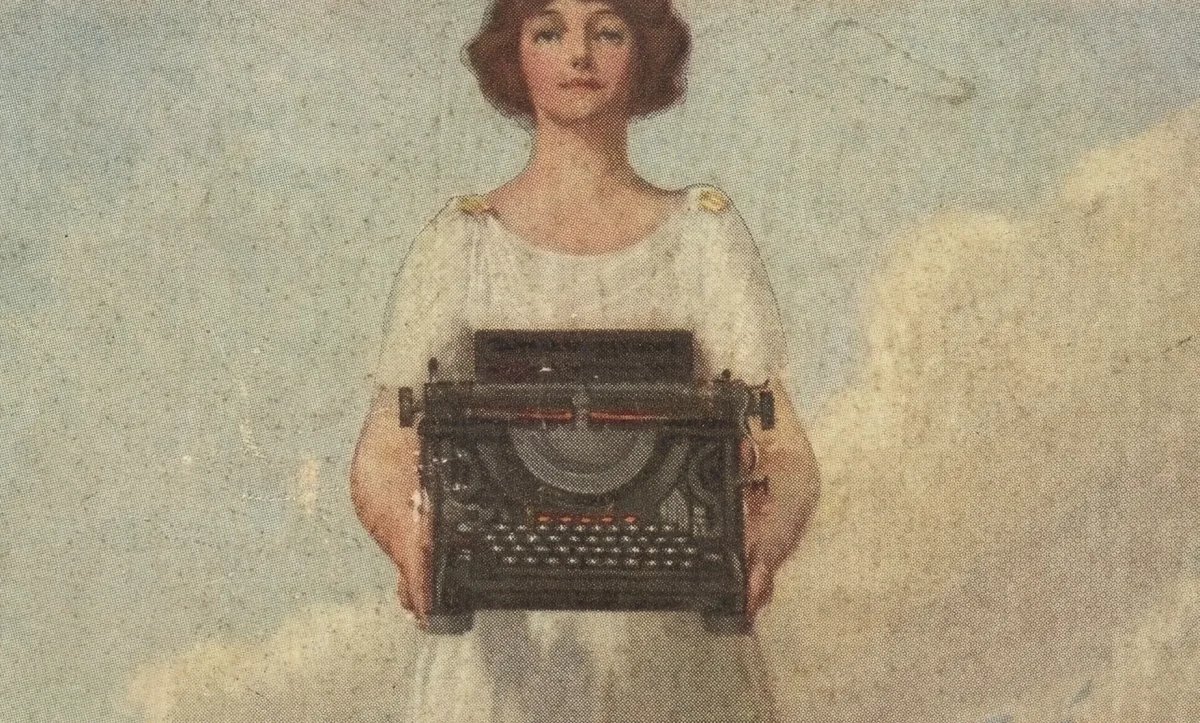
As far as the archival records show, Véra took great pleasure in performing these duties, and the Nabokovs’ marriage was a happy one. Unhappy marriages, however, can also be productive literary partnerships. T. S. Eliot once said that his troubled marriage to first wife Vivienne Haigh-Wood brought about “the state of mind out of which came The Waste Land”. But Vivienne played other roles in the poem’s composition. “I have done a rough draft of part III”, Eliot wrote in a letter, “but I do not know whether it will do, and must wait for Vivienne’s opinion as to whether it is printable.” Like Véra Nabokov, Vivienne was an essential first reader for her husband. An important early draft of The Waste Land is covered in notes by Ezra Pound which, thanks to his own notoriety and role in helping the poem find a publisher, have been the subject of much scholarship. However, Vivienne also left significant notes on the poem. Scholar Arwa Al-Mubaddel argues that Vivienne’s impact is most substantial in the second section, originally titled “In the Cage”, and Vivienne supplied the title of the final section, “A Game of Chess”, which includes a dialogue between a man and woman who resemble the couple.