“I would have written a shorter letter, but I did not have the time.”
— Mark Twain
Overview
This post describes how to write a short document for your teammates. The documents under discussion are commonly referred to as “one-pagers”, and are distinct from engineering design docs or other more formal engineering docs.
A one pager might be written to:
- surface an org pain point
- propose a project
- lay out a roadmap
- explain the current state of a system or systems
- announce or document a decision
This is also distinct from user-facing documentation. Some but not all of what we’re talking about applies to those styles of writing.
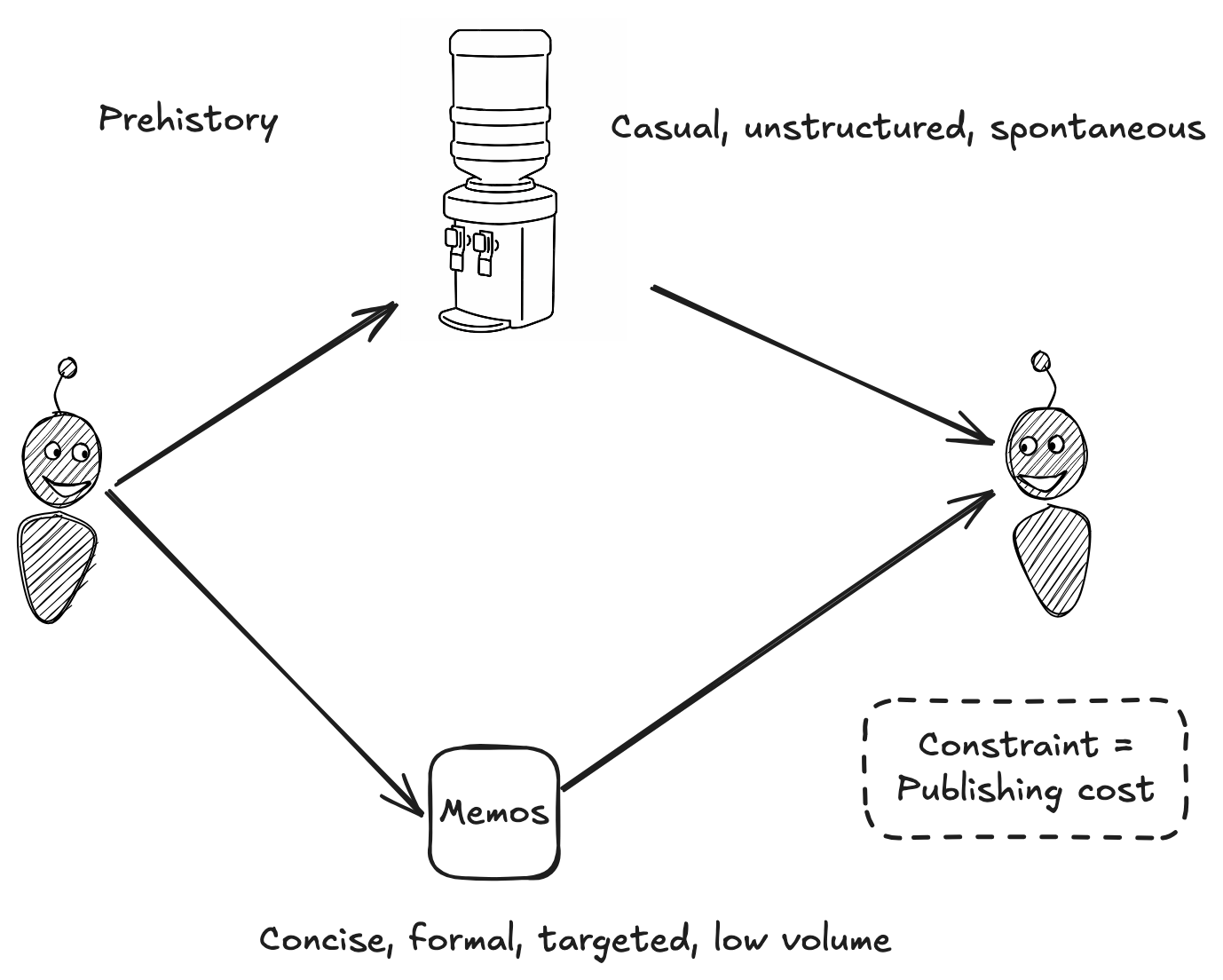
Prior to computers, short memos were a primary tool for intra-office communication, in addition to in person interactions:
They often needed to be re-typed and/or printed, so they needed to be short!
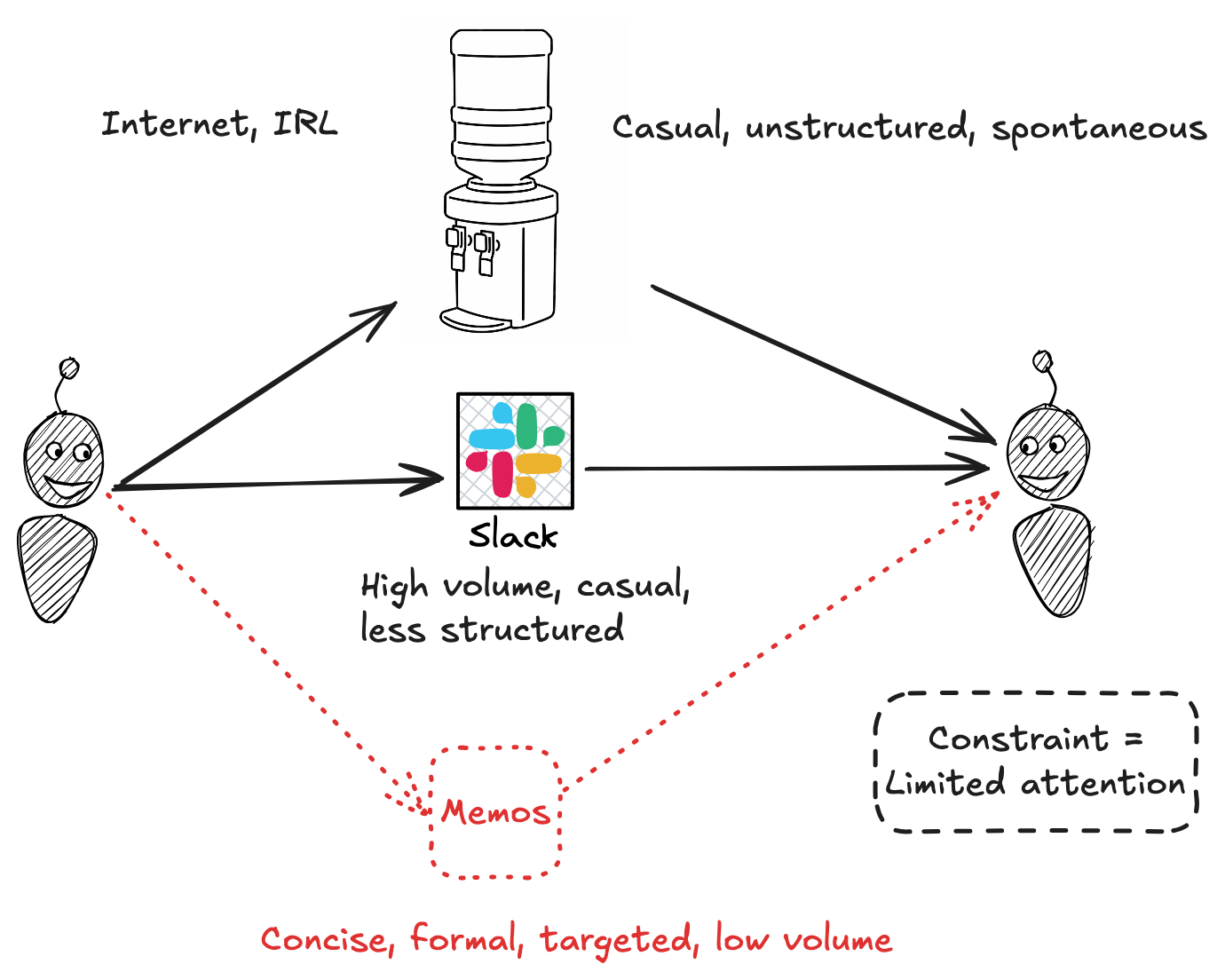
Fast forward to the introduction of Slack and similar tools. Now, writing messages to your teammates no longer costs money. The new constraint is attention bandwidth:
Why writing is a worthwhile skill to develop in the age of AI
With the advent of AI coding agents, coding is somewhat lessened as a differentiating skill. However, you have a major advantage against AI in writing for teammates:
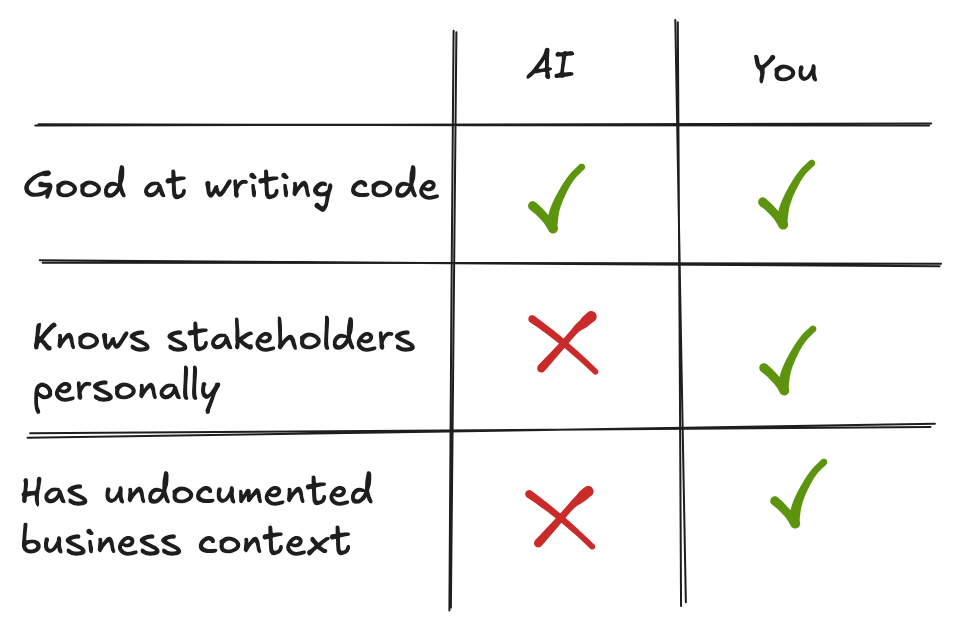
You know your teammates personally, and you have undocumented business context (if what you are writing about is already documented, there probably doesn’t need to be a doc!)
This allows you to synthesize and describe with more precision and nuance than AI can.
This isn’t a skill that AI has (yet), and if it does develop it, it’ll develop them later than other skills like writing code.
How to write a good, short doc
So, how do we do it?
Optimize for short attention spans.
The most important concern is to keep the limited attention budget of your teammates in mind.
Different types of stakeholders will give a different amount of attention to your doc:
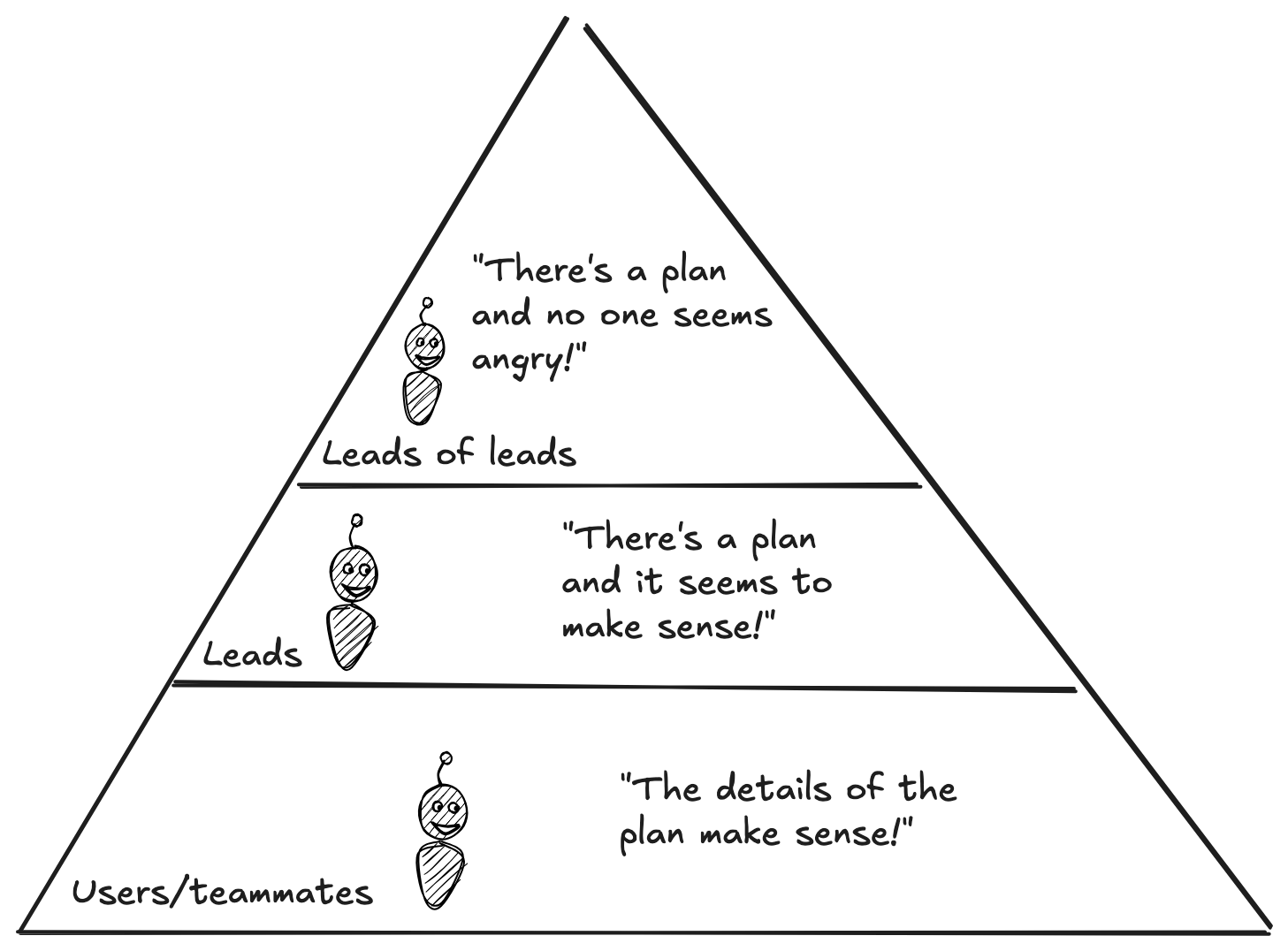
So, in laying out your doc, consider:
- If someone (e.g., a lead of leads) reads this for 5 seconds, do they get the right 5 seconds of context?
- What about 5 minutes?
- If a teammate or stakeholder wants to delve into some of the details while ignoring others, can they?
Tactics for this include:
- Clear, accurate, descriptive titles
- A concise summary at the top of what the doc covers, and what it does not cover
- Formatting: Headings and subheadings that help the reader navigate
- Tabs in Google Docs can be helpful, but are controversial. They can prevent doc sprawl (e.g. working group meeting notes as a tab of the working group charter, rather than a separate doc), but oftentimes are shared with direct links to the wrong tab, which can be confusing for readers.
Diagrams
A visual representation is an excellent way to quickly convey context. Here too, optimize for attention spans. For example, in a system diagram, sometimes it’s helpful to omit some systems that aren’t relevant to the discussion.
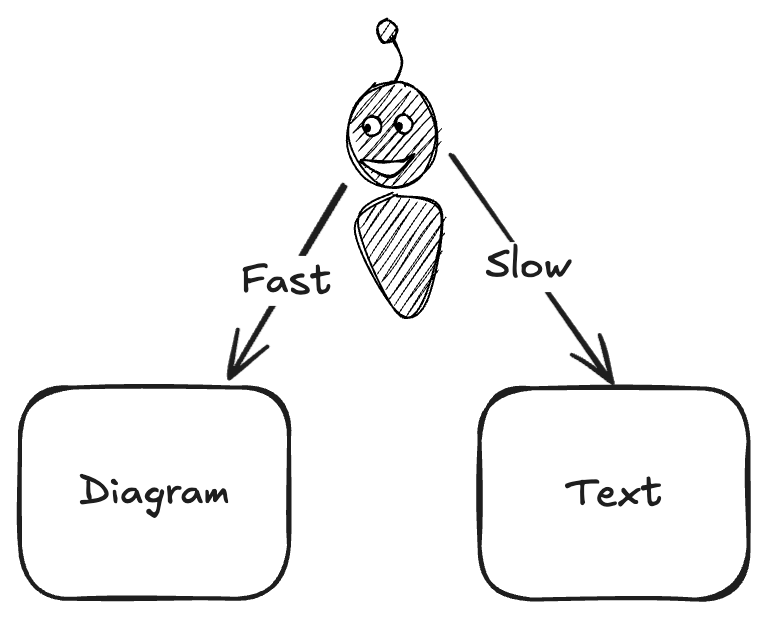
Excalidraw is a really excellent tool for this. It’s open source (you can make them in your code editor), and has just the right amount of knobs and shapes. The hand drawn look means that it’s not as distracting when shapes aren’t perfectly aligned.
Align with reader interest
It’s very hard to persuade people to care about something that they don’t already care about. Much easier is to convince people that something aligns with the thing they care about.
I.e., don’t write “we should do more of XYZ”, write “doing XYZ helps us {thing people already care about}“
If your doc can be summarized by, “everyone should care more about XYZ”, it’s probably not a very good doc!
Connect to existing conversations
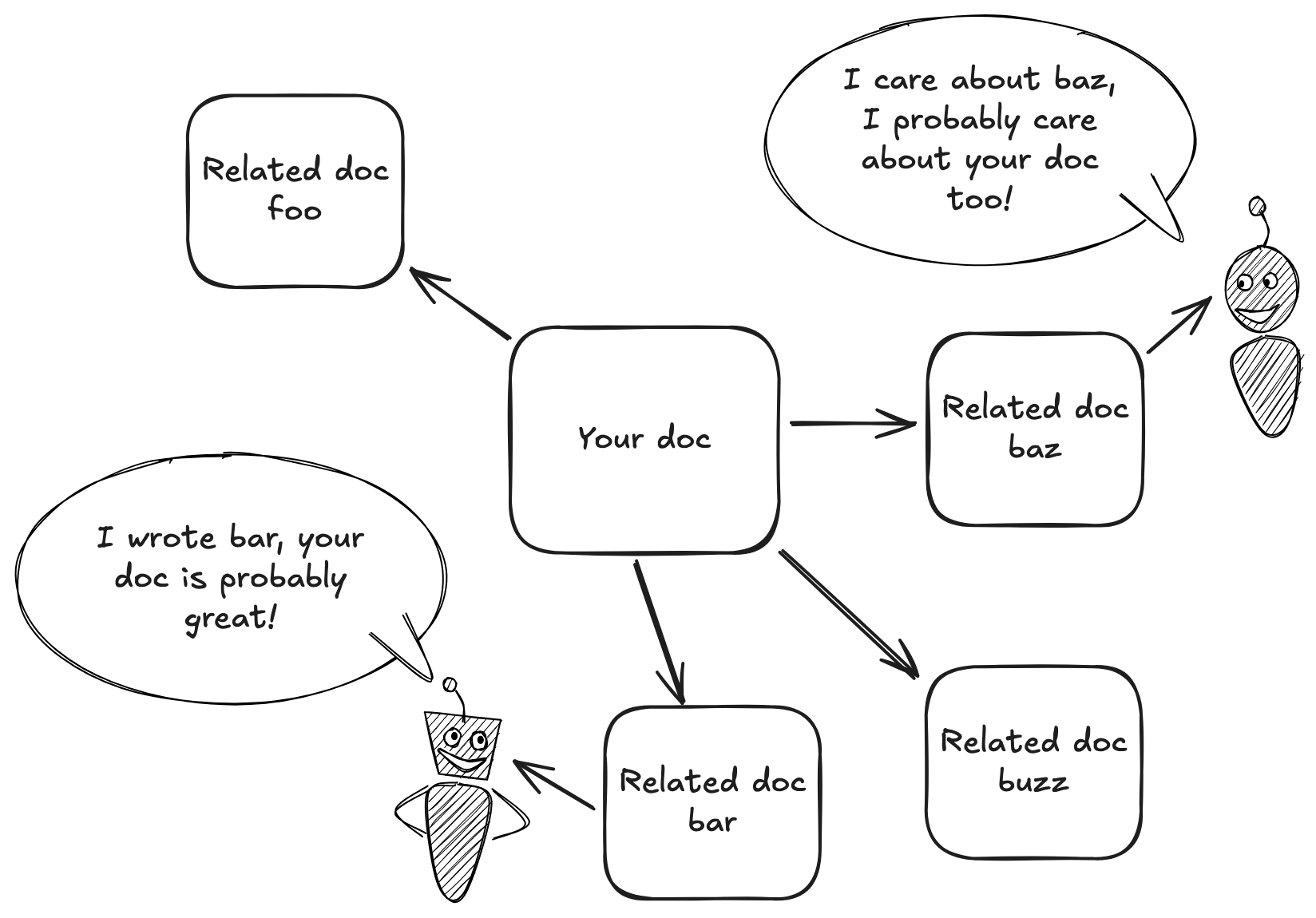
A concrete way to align with reader interest is to connect the dots between your document and other conversations and documents at your company.
Linking related docs at the top of your doc is an easy step that is often missed. This helps in a couple of ways:
- It implies alignment with whatever the linked doc is discussing
- It helps elevate teammates who might be advocating something similar to what you’re writing about
- It makes your doc a useful vehicle for discovery of other docs
Build consensus offline
“Every doc is approved or rejected before it is written.”
— Sun Tzu
If the goal of your document is to build consensus around a decision or initiative, the work should begin before you start writing. It is much easier to document consensus than to build consensus through a document.
Talking to stakeholders in advance lets you better anticipate questions or concerns, and helps you learn the language they use to describe their problems.
Use AI thoughtfully
Use AI as your editor, not your ghostwriter.
It’s worth reiterating: if an AI could do a good job of writing your document, it’s probably not something you need to write.
People give very little attention to text or imagery that other people have generated. If I’m interested in what AI has to say about something, I can have it generate it myself. This will be interactive and more tailored to my understanding.
While AI isn’t a good writer, it’s an excellent editor. It is very good at evaluating your doc and giving useful feedback on it. Typical prompts I use:
Evaluate the structure of my document, and suggest improvements
Identify typos or awkward phrasing, and suggest alternatives
This very easily bleeds into having an AI write the doc for you, and in fact most models will do so unless instructed not to. I add this to agent instructions:
Do NOT write any actual content, paragraphs, or prose into the file
Thoughtful, timely sharing
“If a doc is written in a forest, and no one has the link, does it create business value?”
— George Berkeley
Your doc doesn’t do any good if no one reads it. That’s why being thoughtful about how, where, and when you share your doc is important.
If you’ve already talked to stakeholders, you have a great advantage! They already know your doc is coming, and that it’s about something they care about. They will be able to tell you what the best channels to share for their teammates (and might even do it for you!).
Timing is also important. Attention to an issue can have a short life. Sometimes it’s better to write a less comprehensive doc quickly than a more comprehensive doc that takes longer to write. In these situations, you can acknowledge unknowns, and fill in details later.
Antipatterns
Most antipatterns I observe come from a lack of confidence in the writing or decision. While it’s important to solicit feedback, the fact that you are writing a doc on a topic probably means you are well qualified to speak to it.
Designating a doc as a “Living Doc” or overusing “WIP”
In the age of Google docs, every doc can be changed at any time, so every doc is a living doc. Similarly, once a doc has been shared, it’s time to remove the WIP label.
Adding WIP says to the reader: “You should probably wait to read this”. But you can and should improve your doc at any time.
Hesitance to express a POV
Sometimes, in a decision doc, writers will give even treatment to all available options, in order to avoid looking biased. But this doesn’t really serve the reader well. It’s more helpful to know the decision being favored, and if they disagree they can always comment to that effect.
Burying the lede
A common antipattern is for writers to set up their argument or proposal with extensive background information at the beginning of their doc. Getting through the background should not be a prerequisite for knowing what the point of your doc is – some readers will already have the necessary background context, others will only be interested in the decision. Laying out the scope and goals at the top of your doc orients the reader and helps them understand what background context is relevant.
The hard part
The hardest part of a good (short!) doc isn’t the writing. It’s knowing what to cut, who you’re writing for, and what only you can say. That last one is the part no one else can do for you (not even AI!).