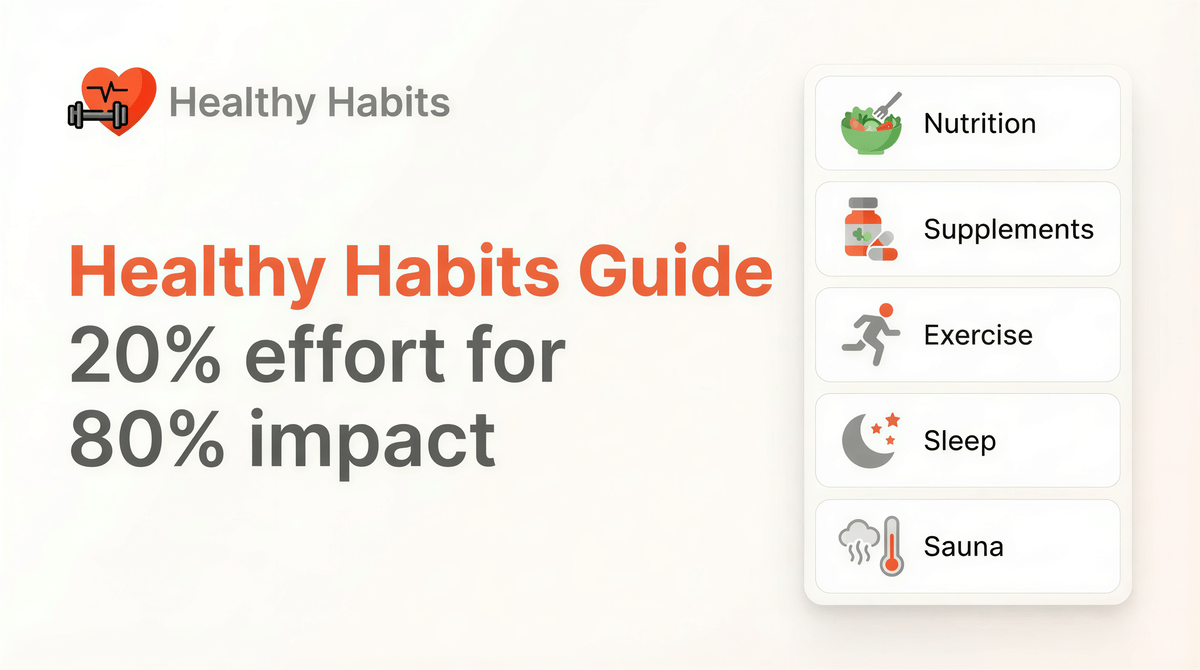
A guide to the highest-leverage longevity habits (20% effort for 80% impact) compiled from evidence-based clinicians and coaches. Curated from Andrew Huberman, David Sinclair, Layne Norton, Andy Galpin, Rhonda Patrick, Bryan Johnson, and others.
Disclaimer: This guide is for informational purposes only and is not medical advice. Consult a qualified healthcare provider before making changes to your diet, exercise, or supplement routine — especially if you have existing health conditions or take medication.
🥗 Nutrition
-
Base your diet on whole or minimally processed foods (meat/fish/eggs or plant proteins, vegetables, fruit, legumes, whole grains, nuts, olive oil) and dramatically reduce ultra-processed foods. [1] [2] [3]
-
Prioritize protein + fiber so you stay full and support muscle: each meal should include a clear protein source and high-fiber plants (vegetables/beans/fruit/whole grains). [1] [2] [3]
-
Limit the “big 3” that make diets go off the rails: liquid calories, added sugars, and highly processed snacks/meals, because they make overeating easy. [1] [2] [3]
🥩 Protein
Protein intake supports muscle growth and maintenance, aids weight management by promoting satiety, strengthens bones and immunity, regulates hormones and blood sugar, and enhances overall recovery and metabolic health. [1] [2]
-
Aim for 1.2 to 1.6 g protein per kg bodyweight per day (Example: 70 kg -> 85 to 110 g/day). [1] [2]
-
If you lift weights, diet (cut), or want muscle go higher: 1.6 to 2.2 g/kg/day. [1] [2] [3]
Tip: Spread your protein intake across multiple meals throughout the day for better absorption.
🌾 Fiber
Fiber intake, a non-digestible carbohydrate from plant foods available as soluble and insoluble types, promotes digestive regularity, lowers cholesterol and blood sugar levels, supports weight control through satiety, boosts gut microbiome health, strengthens heart protection, and reduces risks of diabetes, cancer, and inflammation. [1]
-
If you want a more “optimized” target, build toward 30 to 60 g/day (increase slowly). [1]
-
The easiest way to hit it: make 2 meals/day include a clear fiber source (vegetables + beans/lentils + fruit and/or whole grains). [1]
Tip: increase fiber gradually over 1 to 2 weeks to avoid bloating and drink more water.
🍬 Sugar
Sugar intake, particularly added sugars and refined forms like fructose in processed foods and drinks, is associated with obesity, insulin resistance and type 2 diabetes, heart disease through inflammation and high triglycerides, fatty liver disease, cognitive decline and depression, dental decay, gout, and increased cancer risks. [1]
-
Default: minimize added sugar (especially sugary drinks + corn syrup); get sweetness mainly from whole fruit. [1] [2]
-
A simple “OK” cap: keep added sugar within conservative public-health limits, e.g. ≤25 g/day (women) or ≤36 g/day (men), and ideally ≤10% of calories. [1]
-
Longevity-leaning approach: many people in this camp try to avoid refined/added sugars most of the time. [1] [2] [3]
☕ Coffee
Coffee consumption, primarily through its caffeine and antioxidant content in moderate amounts (3-4 cups daily), enhances cognitive alertness and performance, is associated with lower risk of type 2 diabetes, cardiovascular disease, Parkinson’s, Alzheimer’s, and certain cancers like liver and prostate, supports liver and kidney health, lowers all-cause mortality, and provides anti-inflammatory metabolic benefits. [1] [2]
- For better energy (less crash): wait 90 to 120 minutes after waking before your first caffeine. [1]
💧 Hydration
Proper hydration regulates temperature, supports cognitive function and mood, aids digestion and waste removal, enhances physical performance and joint lubrication, prevents headaches and fatigue, and promotes heart health and kidney function. [1]
-
Use a simple baseline: drink to thirst, and make urine pale yellow most of the day (not crystal clear all day, not dark). Usually it is 30 to 35 mL per kg/day. [1] [2]
-
Distribute this throughout the day — don’t chug it all at once. Stop earlier to avoid waking at night.
🍷 Alcohol
Alcohol consumption, even in moderation but especially when excessive, damages the liver leading to cirrhosis and cancer, weakens the heart causing high blood pressure, arrhythmias, and cardiomyopathy, impairs brain function resulting in cognitive decline, memory loss, and addiction, increases risks of multiple cancers (mouth, throat, breast, liver), disrupts immunity and sleep, promotes mental health issues like depression and anxiety, and accelerates overall mortality. [1] [2]
-
Best-for-health default: the less the better, with zero being the safest baseline for brain and long-term health. [1] [2]
-
If you choose to drink anyway: no more than 2 drinks per week. [1] [2]
💊 Supplements
🐟 Fish Oil
Fish oil, rich in omega-3 fatty acids EPA and DHA, provides key health benefits including improved heart function, better brain and mental health, eye and skin support, and reduced joint inflammation. [1] [2]
-
Default: get omega-3s from fatty fish ~2x/week, or supplement if you do not eat fish. [1]
-
If supplementing: use a product where the label shows EPA + DHA, and aim around ~1 to 3 g/day EPA+DHA (many people land near ~2 g/day). [1] [2] [3] [4]
Safety note: if you have AFib history, bleeding risk, or take blood thinners, be cautious with higher doses. [1]
💪 Creatine
Creatine supports rapid energy production in muscles, which can improve strength, power, high-intensity exercise performance, and muscle mass, while also enhancing brain function like memory and cognition. [1] [2]
-
Take creatine monohydrate 5 g/day, consistently (timing is not important). [1] [2] [3]
-
For brain support under stress consider 10 g/day (split 5 g + 5 g) for ~6 to 8 weeks; this is often discussed for cognitive benefits, especially when sleep-deprived or “stressed brain” contexts. [1] [2]
-
Some research discussed uses ~20 to 30 g once (for example 0.35 g/kg once) to blunt sleep-deprivation hits to cognition. [1]
🏃 Exercise
❤️ Zone 2 Cardio
Zone 2 cardio, a moderate-intensity aerobic exercise (roughly 60-70% of max heart rate), enhances fat burning, mitochondrial efficiency, endurance, cardiovascular health, and recovery while reducing chronic disease risk. [1] [2]
-
Use an easy intensity check: Zone 2 should feel like you can talk in sentences but not sing (steady, sustainable). [1] [2]
-
Aim for 150 to 200 minutes/week of Zone 2 (for example 3 to 4 sessions of 45 to 60 min). [1] [2]
🏋️ Strength Training
Strength training, involving resistance exercises like weights or bodyweight movements, builds muscle strength, boosts metabolism, enhances bone density, reduces injury risk, and improves overall longevity and mental well-being. [1]
-
Do strength training 2 to 3 days/week as a strong baseline for healthspan (and to maintain/build muscle as you age). [1] [2]
-
Progression rule of thumb (Galpin): increase gradually, roughly ~3%/week intensity and ~5%/week volume (do not crank volume up endlessly; keep weekly jumps modest). [1]
-
Deload cadence: build for about ~6 weeks, then take a deload week before building again (50% fewer sets and/or using 10% to 20% lighter weights). [1] [2]
😴 Sleep
Sleep is a vital restorative process that enhances cognitive function, boosts immune defenses, supports heart health and metabolism, aids muscle recovery, and improves mood and emotional regulation. [1] [2]
-
Keep a consistent sleep and wake time (within ~30 to 60 minutes every day) and aim for ~7 to 9 hours (Sinclair often mentions 7 to 8). [1] [2] [3] [4]
-
Get morning outdoor light during first hour after waking (roughly 10 to 30 minutes, more if cloudy) to anchor your body clock and improve nighttime sleep. [1] [2]
-
Cut caffeine at least 8 to 10 hours before bed. [1]
-
Make the bedroom cool and dark (cool room helps deeper sleep). [1] [2]
-
Reduce bright light/screens in the last 1 to 2 hours before bed (dim lights, warm lighting). [1] [2]
-
Optional supplements (only if needed): low-dose melatonin and/or magnesium, glycine, L-theanine are commonly discussed as “try if you struggle” tools. [1] [2]
🔥 Sauna
Sauna bathing, involving exposure to dry heat, mimics moderate exercise through heat stress, is associated with cardiovascular improvements, reduced inflammation, enhanced recovery, better mental health, and longevity benefits. [1] [2]
-
Simple “works for most” protocol: 80 to 100°C (176 to 212°F) for 5 to 20 min, 2 to 3x/week (more frequent can be better if you tolerate it). [1]
-
If you want the “max benefit” version many people reference: 4 to 7x/week is the high-frequency range most associated with big health correlations in Finnish sauna studies (observational). [1] [2]
-
Training/recovery timing note: heat after training can be used for recovery, but it’s not magic; apply it as a tool, not a replacement for sleep/nutrition (and be mindful of dehydration). [1] [2]