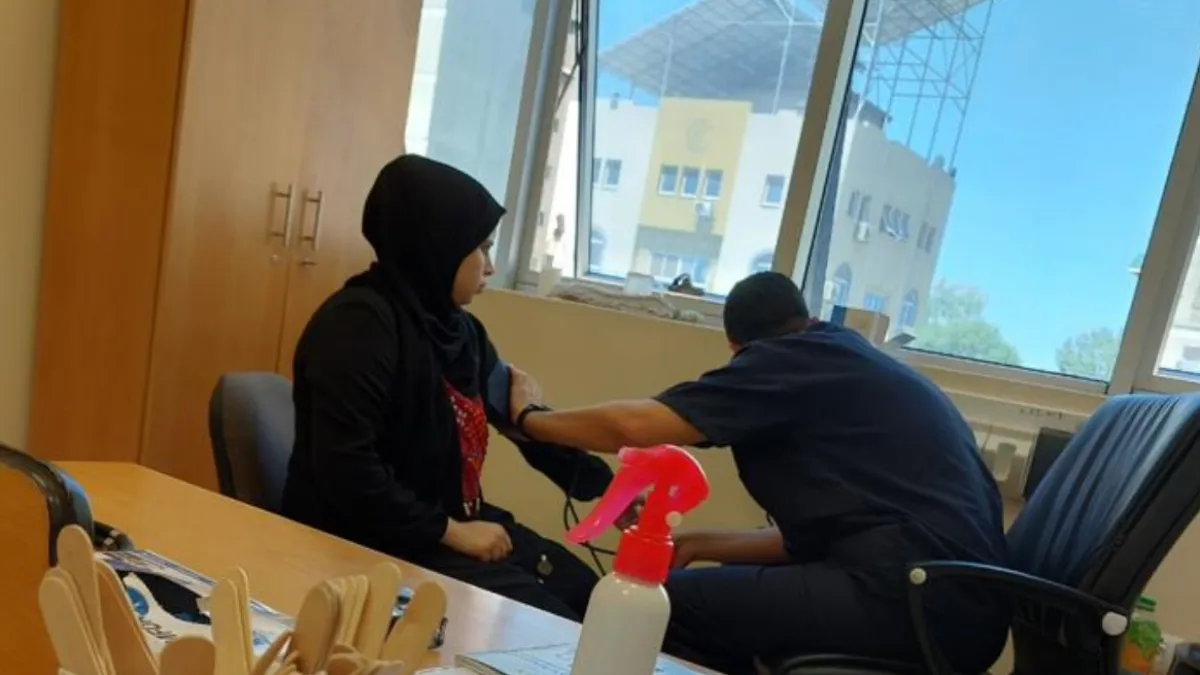
As I write these lines, I am receiving treatment at al-Shifa Hospital in Gaza City for kidney disease. Actually, I don’t know whether what I am receiving can actually be termed “treatment” or if it is only an attempt to postpone the inevitable.
Due to acute shortages of medicine and equipment in Gaza, doctors here make decisions based more on what is accessible than what is medically necessary. I am one such case. The necessary medicine and some of the tests I need are not available in Gaza right now.
My doctor informed me today, after new tests, that my condition has worsened and I urgently need to be evacuated from Gaza. He will do a referral for me so I can be put on the list of the 22,000 Palestinians who are languishing in pain while waiting to leave so they can get urgently needed medical care abroad.
My body, like this hospital I am in, is functioning at the bare minimum.
Life was difficult before the war, but at least there existed a reliable healthcare system, albeit a shaky one. Whenever medicine and tests were unavailable in Gaza, I was able to go to the West Bank and get treatment there. In 2023, I went to a hospital in al-Khalil (Hebron), where the Palestinian Ministry of Health covered my treatment. I returned to Gaza only a few days before the war began.
In the following two years, receiving any form of adequate medical care for my condition became impossible. My body – like the bodies of so many other chronically ill Palestinians – became another battlefield.
Israel’s carpet bombing of Gaza destroyed hospitals one after the other. They were raided, burned, their equipment destroyed, doctors and nurses killed or forcibly disappeared, critical patients pushed out on the streets and left to die.
At the beginning of the war, the nephrology department at al-Shifa Hospital, where I had been receiving treatment for years, was badly damaged. The health authorities tried to rehabilitate it, but it was shelled again multiple times. Today, it is barely functioning and missing much of its equipment.
In May 2024, Israel took over the Rafah border crossing between Gaza and Egypt and closed it. Essential medications vanished, including painkillers and antibiotics.
The medications I need – methyldopa tablets and amlodipine tablets, which I must take twice daily – are nowhere to be found.
In parallel, the Israeli army bombed water treatment plants and pipes and cut off the supply of clean water, forcing us to drink contaminated water from wells. That made my condition even worse.
This breakdown was painful and slow for me. As I stopped doing my routine tests and my prescription drugs ran out, my body began giving warning signals, but no one had the tools to respond.
I began suffering from severe swelling throughout my body. I constantly felt unable to move and experienced extreme fatigue. My health deteriorated drastically, and I lost 24kg (53lb) due to exhaustion and hunger. My current state of complete health collapse is the direct result of a healthcare system that was purposefully demolished and denied the opportunity to give adequate care to its patients.
Disease doesn’t wait for an end to hostilities. Kidneys do not comprehend the politics of opening and closing border crossings. A human body cannot survive on contaminated water and a piece of bread.
When I found out that the Rafah crossing had reopened last week, I felt a glimmer of hope. Then I learned that one of my relatives who is not sick was able to leave through the crossing simply because he has “connections”. Just five critical patients were allowed to leave on the first day of the reopening. My fleeting hope quickly gave way to intense despair.
This is the double cruelty ill Palestinians face: We are denied access to adequate medical care in Gaza because hospitals were destroyed and then are told that connections – not medical necessity – determine whether we can seek care abroad, whether we live or die.
I do not have links to any international organisations or local authorities. I am merely a patient whose body is gradually failing.
I have no idea if I will be able to leave in time. Time is always a prerequisite for hope, and time is not on my side.
My son Zakaria is what keeps me going. I gave birth to him after a lengthy and difficult medical journey, knowing that I will never be able to bear another child because doing so would cost me my health.
In Gaza, the human body is no longer a carrier of life and dreams but a record of survival. Doctors are no longer medical professionals but warriors fighting a battle with their bare hands. Hospitals are no longer places of healing but final lines of defence.
In this place of despair and agonising limbo, I hang on to the fleeting hope that the world will hear our cry for help.
The views expressed in this article are the author’s own and do not necessarily reflect Al Jazeera’s editorial stance.