
Listen to this article
Estimated 4 minutes
The audio version of this article is generated by AI-based technology. Mispronunciations can occur. We are working with our partners to continually review and improve the results.
The executive director of Kashechewan First Nation says 63 people from his community in northern Ontario have tested positive for cryptosporidium, a parasite that causes gastrointestinal illness.
This month, Chief Hosea Wesley declared a state of emergency after the local water treatment plant in the community of 2,300 people stopped working due to defective pumps.
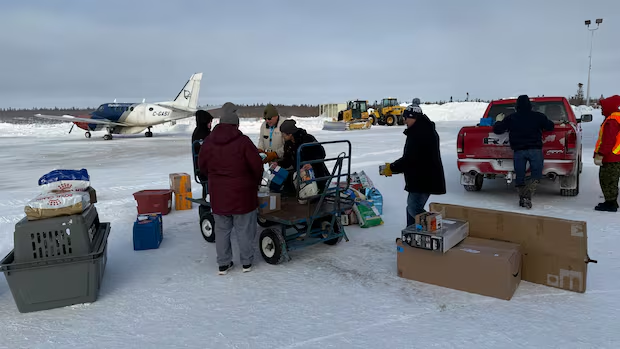
Since then, many members of the community have been flown out.
Executive director Tyson Wesley says test results also show water from the treatment plant has tested positive for cryptosporidium, but it remains unclear how the parasite got into the plant.
Wesley said the community will request that an independent engineer do a full assessment to determine next steps.
Exposure to cryptosporidium can cause symptoms such as nausea, vomiting, diarrhea and dehydration.
Chris Thind, Kashechewan’s health director, said they are focusing on keeping people with those symptoms hydrated.

Thind said people who are otherwise healthy usually recover from those symptoms on their own in two to three weeks.
But people who are immunocompromised may require IV replacement therapy and medication to recover.
To his knowledge, Thind said, there haven’t been any cases of serious illness that have required more interventions.
He added that the total number of cases may have been underreported as some community members presented symptoms early and were never tested.

Since evacuations began in early January, hundreds of Kashechewan residents have been staying in hotels in communities across Ontario, including Timmins, Kapuskasing, Kingston and Niagara Falls.
Wesley said 32 families, or around 370 people, remain in Kashechewan.
“So those are the ones that we’re kind of trying to evacuate,” he said.
Repairs at the water treatment plant are underway, but Wesley said it will take some time before the system is considered safe. More testing will be needed after repairs are complete.
Remembering a past outbreak
Wesley said confirmation that the local water system has cryptosporidium present brings back bad memories of an E. coli outbreak in 2005.
“I think it really tells the story that another generation of Kashechewan people, kids, have to relive those events that happened 20 years ago,” he said.
Sinclair Williams still remembers that earlier outbreak.
Since 2005, the Kashechewan resident has refused to drink the local water. He has stuck to bottled water instead.
“I think there’s going to be a heightened sense of trauma from this,” he said.
Williams was among the evacuees who left the community on Jan. 11. He’s staying with his daughter, who lives in Timmins.
As an educator, he’s been working with children who are currently displaced in Timmins with their families so they don’t fall behind in their studies.
Williams said he’s concerned similar outbreaks will continue to happen unless long-term action is taken to repair infrastructure in the community.

Kashechewan is in a flood-prone area. Evacuations happen every spring when the frozen Albany River melts, elevating the risk of flooding.
Leaders from the community have lobbied for decades to move the community to higher ground, at a location 30 kilometres to the north.
They argue it’s difficult to make long-term investments in the community, such as a new water treatment plant, with that constant risk of flooding every spring.
Indigenous Services Canada spokesperson Eric Head said in an email to CBC News that on Dec. 4, the department approved around $8.4 million to undertake detailed planning studies for the relocation of the community.