
London: Australia will cut the price of European cars and open the door to more foreign investment under a vast trade deal that will lower barriers for farm exporters in the hope of boosting trade worth $110 billion a year.
The federal government appears set to conclude the deal with the European Union this month to align Australia with 27 nations in a pact that counters the tariffs imposed by US President Donald Trump.
But the final terms depend on whether European negotiators accept Australian calls for greater market access for beef and lamb, a key factor in deciding whether EU member states succeed with some of their demands.
The talks have largely overcome differences over the naming rights for European products such as prosecco and feta cheese, smoothing the way for an outcome that protects Australian producers who use these names.
Prime Minister Anthony Albanese is expected to welcome European Commission President Ursula von der Leyen to Australia two weeks from now in the hope of unveiling a deal that tightens the strategic alliance between the two sides.
This depends, however, on a visit to Brussels next week by Trade Minister Don Farrell to meet EU counterpart Maroš Šefčovič and ensure the final terms deliver as much as possible for Australian farmers.
Farrell slowed the negotiations in October 2023 at a meeting in the Japanese city of Osaka when EU officials were confident of a deal, but the Australian side believed the quotas for beef and lamb were not good enough.
The slowdown offended some within the EU delegation, but highlighted the Australian concern about European rules that limit the volume of beef and lamb from overseas and therefore shield farmers at the cost of higher prices for consumers.
EU spokesperson Olof Gill said Šefčovič, the EU trade commissioner, was scheduled to meet Farrell next week. There is no official confirmation, however, of the visit to Australia by von der Leyen.
“The EU is committed to strengthening relations with Australia, a strategic and like-minded partner,” Gill said. “As always, progress in the sensitive phase of negotiations will depend on substance.”
An Australian government source said an outcome was close and did not deny the von der Leyen visit. Others said it was due to take place about February 17 and would last a few days. News of her Australian visit was reported by online newspaper The Nightly on Wednesday and in The Financial Times last month.
Farrell has expressed hope that the final obstacles could be overcome this month.
“We’re not far away,” he told Sky News last week. “Some of the big issues, particularly the volume of Australian meat into the EU and the conditions surrounding that beef going into Europe, still remain unresolved. They’re the big issues.”
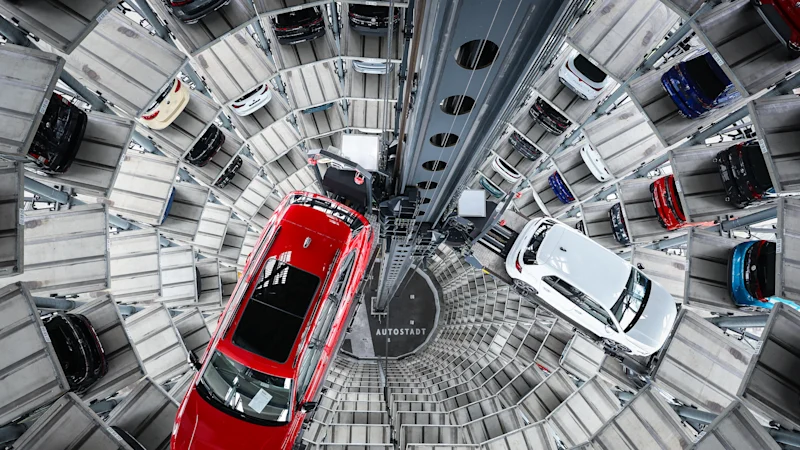
The slow progress on the EU trade deal has bedevilled Germany and other European countries because their cars face a 5 per cent tariff in the Australian market, while similar tariffs have been cut from Japanese, South Korean, Chinese, Thai, US and UK vehicles.
This tariff appears set to be removed, cutting prices for Australian consumers. The EU is also seeking concessions on Australia’s luxury car tax, which hits many premium European brands. An exemption is unlikely, said sources who spoke on condition they were not named so they could speak freely about the negotiations.
One option is an easing of the luxury car tax for some electric vehicles from Europe.
The Australian tariff reduction is also expected to cut the cost of machinery from Europe, an important cost in manufacturing and technology.
The biggest economic gain, however, is expected to come from changes that encourage more investment into Australia from EU members that have a disadvantage against those from the US, the UK or Japan.
The Foreign Investment Review Board applies a standard threshold on the value of a transaction – currently $347 million – to trigger a review that can reject the deal. Under trade deals with the US, UK, Japan and some other countries, this threshold is just under $1.5 billion.
With a trade deal, the EU would join the countries with easier FIRB rules and this may encourage foreign investment.
The European Australian Business Council, which has argued for the deal for many years, said the outcome would deliver “multi-billion-dollar gains” to both sides.
“For business, the FTA will be transformational,” said EABC chief Jason Collins. “It delivers certainty, scale and a level playing field for companies operating across both markets.”
Collins named defence, security, clean energy, critical minerals and high-tech research as areas that would gain from the deal.
The final talks could agree on faster access for skilled workers on both sides, addressing concerns in Europe that it can be too slow to get visa approvals for workers coming into Australia for major projects.
A sweeping deal on working visas would be challenging, however, because it could require approval from each of the 27 member states in the EU.
On another key issue, wine and food, Albanese warned last year that he did not want to disadvantage Australian producers of prosecco, feta cheese or other products that use names the EU claims belong to Europe alone.
“The naming rights of those products are related to migrants from Europe who’ve come to Australia and produce products that they continue to call feta or prosecco because they’re based upon the heritage,” he said.
“That’s something that the Europeans should be proud of.”
One solution to the debate over these “geographical indications” is for Australian producers to brand their feta as Australian feta, for instance. The treatment of prosecco may be referred to further consideration under a longstanding wine agreement so that it does not jeopardise the trade deal.
Australian trade with the EU is worth $109.7 billion a year but is expected to grow under a deal that removes barriers. While the trade in products has been a sticking point in the talks, some of the biggest advantages are expected to come from trade in services and greater investment.
European farmers have protested against major trade deals in the past, and this has slowed progress on the recent EU agreement with the “Mercosur” countries of Brazil, Argentina, Paraguay and Uruguay.
Unlike the Mercosur deal, the Australian agreement would not need as many EU approvals because Australia already has a partnership with the EU. This means the Australian trade deal requires a decision by von der Leyen and Šefčovič at the executive level, followed by approval from the political leaders of member states.
This would avoid the need for ratification by national parliaments, depending on the scope of the agreement.
Get a note directly from our foreign correspondents on what’s making headlines around the world. Sign up for our weekly What in the World newsletter.
 David Crowe is Europe correspondent for The Sydney Morning Herald and The Age.Connect via X or email.