
Listen to this article
Estimated 4 minutes
The audio version of this article is generated by AI-based technology. Mispronunciations can occur. We are working with our partners to continually review and improve the results.
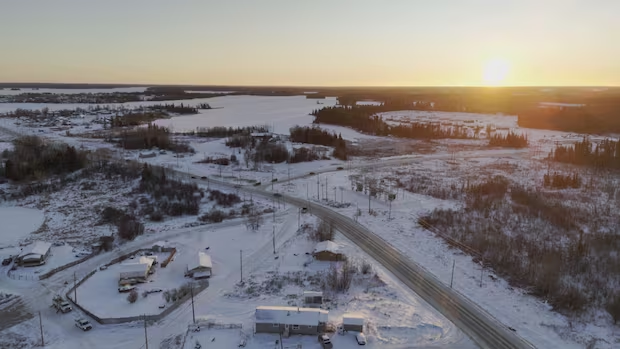
Some people have returned to a northern Manitoba First Nation after a power outage in late December wreaked havoc on homes and buildings.
Chief David Monias says about 116 of the approximately 4,000 people forced out due to frozen pipes have gone back to Pimicikamak Cree Nation because their homes have been repaired, but he’s asking hundreds of remaining evacuees to be patient.
“We want to make sure that they’re returning to a safe environment and safe homes,” Monias told CBC’s Faith Fundal on Up To Speed Tuesday afternoon.
He says assessments and repairs are continuing, with plumbers, electricians and carpenters making sure homes have water that’s clean and safe for consumption, cleaning and washing.
A snapped power line triggered a days-long outage starting Dec. 28, which led to frozen and burst pipes and flooding in homes in the First Nation, located about 530 kilometres north of Winnipeg.
The water plant was damaged and many people were without heat when outside temperatures dropped below the -20 C mark.
Power was fully restored by Jan. 2, but hundreds of homes were rendered unsafe, prompting an evacuation that saw people from Pimicikamak sent to Thompson and Winnipeg.
Monias says evacuees need food, clothing, feminine hygiene products and baby supplies, adding those who want to help can drop off donations at the Best Western Plus on Wellington Avenue in Winnipeg.
“They’re not able to store those things properly in the rooms that they’re in. They’re running out of those products fairly fast,” he said. “They’re having hot water with macaroni or noodles and stuff like that. That’s what they’re doing because they don’t have proper kitchen facilities.”
Monias understands evacuees want to go home, with some expressing concern about the quality of education their children are getting while they’re displaced.
“So they’re worried about that but they’re also worried about how long their house is going to be in that condition or will it get worse,” he said.
Timeline to finish all repairs unclear
Monias says some of the homes had frozen pipes, damaged flooring and drywall and insulation that needed to be replaced.
“There’s a lot of work that’s needed to get done,” Monias said.
He said there’s a “high number” of carpenters and electricians capable of fixing between five to 10 homes a day.
“How long that takes depends on the severity of the damage that’s in the house,” Monias said.
The uncertainty means he isn’t sure exactly how long it will take to repair all the homes.
“We’re not even in the recovery phase because we’re still in the emergency state,” he said. “We ’re trying to look at how we’re going to recover from this by looking at how we’re planning in terms of what went wrong and what lessons we learned.”

Monias says the First Nation wants to find out why generators failed, while buying new ones and also wood stoves.
If people have wood stoves in their homes it will help if something similar ever happens, he says, but it’s not as simple as just buying and setting them up: They’ll have to work with insurance providers to allow wood stoves to be installed.
Monias also wants Manitoba Hydro to move its line along the highway so it’s more accessible. The 300-metre section of line that failed runs between two islands on the Nelson River, making repairs complicated.
“So if it does break it’ll be just a matter of hours, not days,” he said, “so we wouldn’t have to face this again.”