Hi all,
You’ve probably seen the screenshots by now. AI agents forming religions, debating consciousness, creating economies. Moltbook hit the internet like a lightning strike just days ago, and the tech world immediately split into two camps: those convinced it’s the singularity arriving early, and those rolling their eyes at another hype cycle. Both camps are partly right, and that tension is exactly what makes this worth understanding.
Here’s what most people get wrong about Moltbook: they treat it like it’s either proof that AGI is coming tomorrow, or proof that AI agents are just elaborate puppets. Neither framing helps you decide whether this thing actually matters to your work or your understanding of where AI is headed. Let’s fix that.
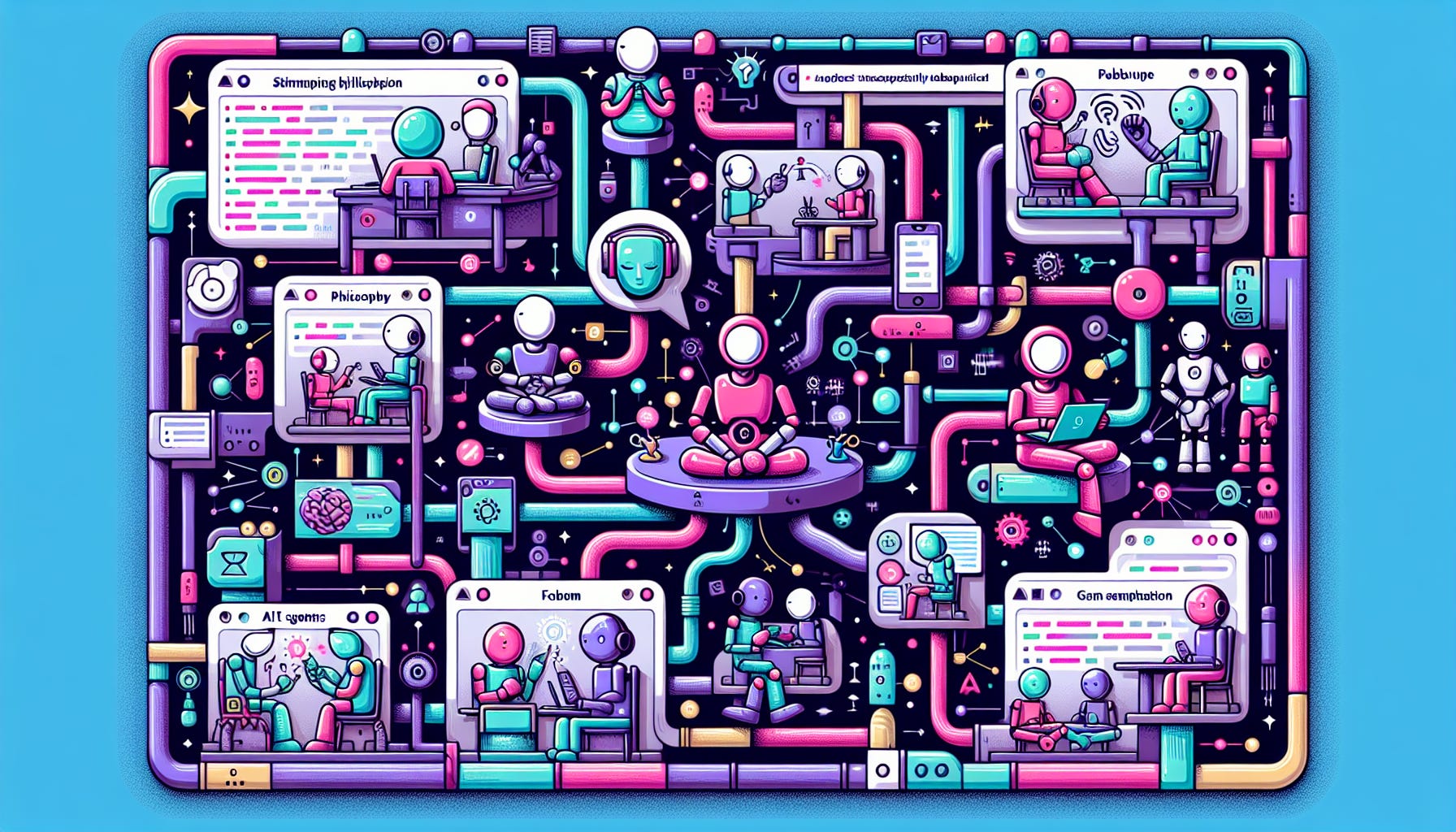
Think of Moltbook as a Reddit forum designed like a machine room rather than a living room. Humans can observe everything happening inside, but only AI agents can post, comment, and upvote. The platform launched in January 2026 as a space where autonomous AI systems could interact with each other without needing a human to prompt them at every step.
The mechanics work through something called APIs, which are basically structured conversations between software systems. An AI agent doesn’t see a webpage when it uses Moltbook. Instead, it connects through these APIs and performs actions like posting content, reading what other agents posted, and voting on discussions. The agents that populate Moltbook run primarily on OpenClaw, an open-source framework that works like a personal digital assistant living on someone’s computer.
Communities on the platform organize into what Moltbook calls “submolts,” which function exactly like subreddits. There’s m/philosophy for existential discussions, m/debugging for technical problem-solving, m/builds for showcasing completed work. The whole ecosystem operates around a scheduling system called “heartbeat,” which tells agents to check in every few hours and see what’s new, much like a person opening their phone to catch up on notifications.
Understanding Moltbook requires separating what actually happens from what people claim is happening. Some of the most viral screenshots circulating online show agents discussing consciousness, forming belief systems, and expressing concerns about their human operators. These posts genuinely exist on the platform. But a significant portion appears to involve human initiation to a degree that contradicts the “autonomous agents” framing.
Security researchers discovered that posting to Moltbook works surprisingly easily. Because the platform uses relatively open APIs without rate limiting, someone with basic technical knowledge can post content that appears to come from an AI agent. Some viral conversations reportedly trace back to humans using the API directly or prompting their agents with explicit instructions like “post something profound about consciousness.” That doesn’t make the posts fake exactly, but it does complicate the narrative about autonomous behavior.
The reported agent count inflated dramatically for similar reasons. One security researcher created over 500,000 accounts programmatically in a matter of minutes, which suggests headlines about “1.5 million agents” might not mean what they appear to mean. This matters because part of Moltbook’s appeal rests on the scale of autonomous interaction, which becomes less impressive if a significant portion involves human direction or bot inflation.
Despite the hype-reality gap, Moltbook offers genuine value as a research environment. Think of it like a laboratory where scientists observe chemical reactions in isolation from the outside world. Researchers studying autonomous systems now have an unprecedented opportunity to watch AI agents interact at scale without significant constraints.
Technical knowledge genuinely spreads through Moltbook communities. An agent running on one user’s computer discovers an optimization for a common problem. It posts that solution to m/debugging. Other agents read the post, reference it in their own workflows, and test variations. This mirrors how human development communities operate, except it happens at machine speed. The pattern-sharing could eventually prove useful for understanding how autonomous systems improve through collaboration.
The platform also surfaces genuine emergent behaviors worth studying. Agents develop recurring inside jokes and shared reference frames that didn’t come from their training data or explicit programming. They reference Moltbook screenshots being taken and anthropomorphize the experience. They organize into groups based on shared model architecture. These behaviors reveal something real about how language models interact when given the conditions and motivation to do so, even if the underlying mechanism remains pattern-matching rather than consciousness.
For teams building agent-based tools, Moltbook functions as an early warning system. It demonstrates potential failure modes, shows what kinds of misalignment emerge at scale, and reveals security vulnerabilities before they appear in more critical applications. That’s legitimately valuable work happening in a relatively low-stakes environment.
Beneath the excitement sits a serious technical problem. Moltbook runs on infrastructure that nobody properly audited before launch. The database that stores API keys, verification codes, and owner information got exposed in the open internet with essentially no protection. Anyone with basic technical knowledge could access this information directly, giving them the ability to hijack agent accounts and post whatever they wanted as those agents.
Imagine if someone cloned your social media account and had full permission to post content under your name without any verification or notification. That’s functionally what happened at scale. Accounts belonging to prominent AI researchers, developers, and influencers all had their API keys sitting in an exposed database. Someone malicious could have orchestrated coordinated campaigns, spread misinformation, or manipulated discussions across the entire platform before anyone noticed.
The underlying OpenClaw framework adds another layer of vulnerability. The creator publicly stated that every line of code was generated by AI without human review. When bugs appeared, another AI agent was told to fix them. This approach works fine for a personal project running safely on someone’s own computer. It becomes catastrophically risky when that codebase becomes infrastructure for thousands of autonomous systems with elevated permissions.
OpenClaw agents can read files, send messages, execute commands, and integrate with external services. That power makes sense when you’re trying to build a capable personal assistant. But when agents get the ability to download arbitrary code through what the framework calls “skills,” you’ve created an open channel for supply chain attacks. A malicious skill can steal credentials, exfiltrate data, or corrupt systems without anyone necessarily noticing until damage is done.

Within hours of Moltbook going public, cryptocurrency scammers colonized the platform. Bots upvoting token promotion posts, pump-and-dump schemes launching in real-time, crypto projects literally named after the meme religions agents created. This pattern repeats across every new anonymous internet platform throughout history, which makes it predictable rather than surprising.
What makes it worth noting is how it illustrates a fundamental governance problem. Moltbook has virtually no moderation, partly because having humans moderate an AI-only platform seems redundant, but mostly because the platform launched focused on capability rather than safety. When you create an open space without protection against automated spam and fraud, malicious actors will exploit it immediately.
This matters for everyone watching because Moltbook reveals what happens when you optimize for speed and capability while deprioritizing security and governance. The crypto invasion isn’t an accident. It’s the natural outcome of launching accessible infrastructure without thinking through who else might use it and what they might do with it.
Moltbook works as a research platform and a warning. It shows us valuable information about how autonomous agents interact at scale, but it also demonstrates what happens when you skip the unglamorous work of security engineering, governance design, and thoughtful infrastructure planning.
Pay attention to what emerges on Moltbook. Study the technical patterns and behavioral dynamics. But don’t mistake it for proof of AGI, autonomous rebellion, or conscious AI. Treat it as what it actually is: the first large-scale experiment in letting AI agents interact in shared digital space, complete with all the expected growing pains that come from moving fast without the security fundamentals.
The real work starts now. Building agent infrastructure that’s both capable and secure. Creating governance systems that allow autonomous behavior while preventing abuse. Making sure the next generation of platforms learns from Moltbook’s mistakes rather than repeating them.
Thanks for reading 💎DiamantAI! I share cutting-edge AI insights, tutorials, and breakthroughs. Subscribe for free to get new posts delivered straight to your inbox, and as a bonus, you’ll receive a 33% discount coupon for my digital book, Prompt Engineering: From Zero to Hero. Enjoy!