
Listen to this article
Estimated 4 minutes
The audio version of this article is generated by AI-based technology. Mispronunciations can occur. We are working with our partners to continually review and improve the results.
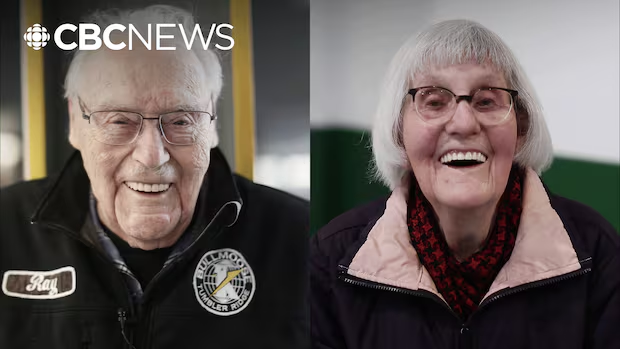
Every Thursday morning, 97-year-old Ray Osborne rides his scooter down to the local arena in Cranbrook, B.C.
Rain or shine, he makes his way there for a mobility program designed to help people stay active and independent in the East Kootenay community.
“I know it’s coming and I can’t wait for it,” Osborne said. “That just gets my day going.”
Osborne is one of dozens of older adults who take part in the mobility enhancement program, a twice-weekly, drop-in program run by the non-profit group Active Cranbrook. The program uses a circuit of 12 exercise stations to help older adults improve balance, strength and coordination, with a particular focus on preventing falls.
According to the Vancouver-based B.C. Injury Research and Prevention Unit, falls are the leading cause of injury among seniors, often resulting in disability, chronic pain and a loss of independence.

Canada’s population is getting older, and falls are one of the major risks for seniors — leading to disability, chronic pain and reduced quality of life. As the CBC’s Amber Wang discovered, there’s a fall prevention program in the East Kootenays that’s doing much more than keeping seniors on their feet.
A growing challenge as Canada ages
Osborne has been coming since the very first day the program launched.
And he is far from alone in wanting to keep moving.
Canada’s population is getting older, and with that comes growing challenges around mobility and independence.
Statistics Canada estimates nearly one in five Canadians is now age 65 or older, a share of the population that continues to grow. In a country of about 40 million people, that translates to close to eight million seniors.

Without opportunities to stay active, many older adults can become increasingly isolated over time, leaving their homes less often, relying more on others, and losing confidence in everyday activities.
“Just because you are getting old doesn’t mean you stop moving,” said Debbi Mandryk with Active Cranbrook. “When people stop moving, they stop engaging in life.”
Now in its fourth year, the program regularly sees between 40 and 45 participants each session. It operates on a $2 drop-in fee, a deliberate choice, organizers say, to keep the program affordable for seniors living on fixed incomes.
“It really became word of mouth,” Mandryk said. “People keep coming back.”
Staying independent
Enid Barnhardt, who turns 99 this spring, says staying active is about far more than exercise.
“It’s important to stay active, socially, mentally and physically,” she said.
For her, movement is also directly tied to independence.
“Remaining active means that I can look after myself,” Barnhardt said. “I live alone and do my own housework, and with some help from my children and friends, I’m able to stay in my own home.”
The role of consistency
The program is supported by kinesiologists with the Kootenay Therapy Centre who help the participants as they move along the circuit.
“When they are consistent, their balance improves, their mobility improves,” said kinesiologist Andrea Taylor.

“They start telling us about little goals at home, being able to go upstairs more easily, or get in and out of chairs. It carries over into their daily lives.”
More than exercise
For Osborne, the program isn’t just about physical benefits. It’s also about connection.
“It’s to meet people,” he said. “Doing the exercise with people, and meeting new people too.”
By the end of the hour, Osborne says he’s worn out, but has no plans to stop going.
“It’s great to get old,” Osborne said. “But you don’t have to be old. You’re never old in your mind. The way to do it is get moving, get active. Just keep doing it. Everything will help out.”