The poet said beauty is truth. Okay, sure—but I don’t think you’ve really understood Keats’s practical meaning until you’ve grappled with its inverse. I remember my childhood schools with their claustrophobic halls and nasty floors, boxes hardly penetrated by sunlight as we scurried about in our cages; the televisions blaring as you entered every room with a certain distinct tone of patronizing stupidity, their programs killing the time between the commercials that justified their existence; the way the sky would reliably turn gray no matter the weather north of about Exit 129 on the Garden State Parkway, on account of the coal plants and garbage incinerators Manhattan outsourced long ago to its hinterlands; how every year of my life the homeless encampments have grown larger, the suburban strip malls and city trains more decrepit, the seas of concrete ever more littered with cracks, as the rich retreat to gated communities resembling nothing so much as colonial compounds.
Even as a child I intuited that all this ugliness revealed an inner rottenness to the society around me—that bad buildings, bad television, bad pollution control and bad design somehow had to have been the product of bad values. And it was this disgust, perhaps even more than my elevation in the presence of a beautiful painting or a beautiful boy, which instilled in me my lifelong conviction that aesthetics is ethics, and ethics is aesthetics.
Despite having been raised in a time and a place where this means very little, perhaps precisely because of it, I knew, even before I had the concept, that I was an artist. The objects and acts that we call works of art seduced me. They motivated my thinking, gave it a purpose, dictated its objectives. I wanted to spend my life making things just like them, even before I knew how or if such a life was possible. Eventually I gathered that I wasn’t alone. But nowadays artists, even the successful ones, are all too often broken and demoralized people—the mirror image of a society increasingly fractured and unsure of itself. Watching people from various walks of life destroy themselves or waste their talents in all the usual ways, I have come to believe this connection is no coincidence: that, however improbable it sounds, the problems of the artists simply are in some fundamental way the problems of society. And this because society as such is in some way the product of art, equal and opposite to the way that art is the product of society.
But what does it mean for society to be a product of art? Another poet, William Carlos Williams, said this of the work artists do: “men die miserably every day / for lack / of what is found there.” Perhaps the answer begins with being unafraid to name “what is found there”: what the nineteenth century would have called the beautiful, the true and the good. We know today that beauty, truth and goodness are not static entities independent of language and history. They have always changed across different cultures and different time periods, often to the point of becoming unrecognizable—and we know they’re not even the only words one could use to describe what art contains. And yet, for all that, there is always something like them at the very core of art. Whatever anyone chooses to call it, this is what seduces us in art, what remains capable of giving us that sense of our existential and ultimate purpose. And if you believe, as I do, that such values don’t simply reside in the world of natural objects or the minds of conscious subjects but are made and produced, then the fundamental questions that arise are those a socialist like me must always ask about any process of production: Just how do we produce them? Who does? With what resources? To what ends? Why even attempt to build such values into the clutter of our shared world—and what kind of world, in general, is worth building?
●
To hear it from your typical professor, socialism means Marxism and Marxism has a lot to say about art—just not much about its beauty, and surprisingly little about its production. Mostly we’re told it’s a family of theories concerning interpretation. So for example you have the vulgar ones, the party bosses, who read artworks like political pamphlets and judge them solely by the stated views or class background of the authors (the less said of these guys the better). You’ve got your Lukács and your Gorky types, who were interested in the historical emergence of class consciousness through the bourgeois realist novel; the esoteric readers like Engels on Balzac or Jameson on Joyce, who try to see the social realities captured in a work regardless of its author’s goals and intentions; and arthouse Marxists like Adorno, who champion avant-garde experiments in form because these in themselves somehow set us free.
But there was always another sort of artistic socialism, one that never got canonized in high theory. It has no name and extends beyond academic or party Marxism. It’s serious not only about the practical details of how art is made but what makes it beautiful. And it’s unafraid to articulate a program for art—one far less boring and stupid than nationalizing it or subjecting it to the blue pencil of the state censor. So far as I can tell this lineage of thinkers has its origins in nineteenth-century Britain, with later branches stretching across anarchism, democratic socialism, international modernism and the dissident wing of Soviet communism. For lack of a better term I’ve taken to calling them the socialist aesthetes; their body of work, a socialist aesthetics.
Socialist ideas of beauty grew out of Romanticism. Already in Shelley’s “Defence of Poetry” there’s a hint of what’s to come: his idea of poets as creating the social world through their work, comparable or in fact superior to the founders of religions, is closely bound up with his commitments to revolutionary democracy. Another key figure is the anti-capitalist but politically ambiguous John Ruskin, whose views straddled aristocratic Toryism and Christian socialism. But the first socialist aesthetes properly so-called were probably Oscar Wilde and William Morris—both libertarian or state-skeptical socialists, the former closer to anarchism and the latter to Marxism—and it’s they who set the general parameters of this conversation.
At the core of all socialist aesthetics is the argument that we could have more beauty in the world if we restructured our economic activity to increase its production. But this ruthlessly materialist view that art is a social product, that it has a political economy, that the wages system and the social classes are fetters upon it, is always paired with an idealism borne of artists’ practical experience—an understanding that creative work is a fragile affair, that no great art can exist without freedom of the individual, that beauty can’t be produced on a five-year plan.
Well, beauty itself can’t. But its preconditions—the leisure time, training and resources one needs to pursue art—very well might.
In his lectures on the political economy of art, Ruskin outlines a convincing enough theory that every society, no matter its economic arrangements, generates roughly the same proportion of individuals across its population with the biological-behavioral temperament (the neurotic sensitivity?) to maybe hack it as artists. But this is nothing more than potential—and in our society as in many others, it’s generally wasted, as most such people, by being born into the working classes, are sorted into roles that neither cultivate nor make use of these talents. “For aught I know, there may be two or three Leonardo da Vincis employed at this moment in your harbours and railroads,” Ruskin writes, “but you are not employing their Leonardesque or golden faculty there,—you are only oppressing and destroying it.”
Ruskin modestly prescribed public museums, cheap art schools, programs to discover young talent, price regulations to let artists make a living while keeping their products affordable. Oscar Wilde, in his famous work “The Soul of Man Under Socialism,” went further: he insisted on socializing the means of production, reducing the workday to a minimum, and abolishing the need for unpleasant jobs through innovation so that everyone could spend most of their time doing whatever they please and in so doing fully develop their personality. Art under socialism is of special concern to Wilde because he frets that, in human history so far, only artists completely dedicated to their work (without too much worry about food and rent) have really achieved this complete humanity. With the new efficiencies of machine production, Wilde argued, there’s no good reason everybody can’t. “Socialism,” he famously said, “will be of value simply because it will lead to Individualism.”
Democracy in art, he argued, won’t come about by a small-minded and tyrannical audience becoming the supreme censor (a more ruthless replacement, he notes acidly, for princes and popes). Rather, it will come from more and more people pursuing their own free development, becoming artists of some sort themselves, and creating new ways of seeing, talking, thinking or living that enrich our common culture.
●
This brings us to the socialist aesthete perhaps most radically committed to both democracy in art and the supreme freedom of the individual artist: William Morris. A leader of the Arts and Crafts movement, best known for his flowery wallpapers and woodcut-illustrated books, Morris was also a cadre of England’s earliest socialist parties and an aesthetic theorist of the highest order. He spent plenty of time fighting against the sweatshops, the child labor, the endless workweek and other obvious evils of Queen Victoria’s capitalism. But scattered across his large body of speeches and essays is a complex set of socialist arguments that are perhaps more counterintuitive: that capitalism wrecks the production of beauty at scale, and that all art should be placed under the collective control of the artists.
Isn’t art all about individuality? The socialist aesthete answers: yes, but also no. Maybe all a writer needs is their pen, a painter their colors—but Morris’s overwhelming intuition is that the instant you think about art in general, you’re always really talking about a large-scale production requiring the cooperation of many working hands across the economy. One need only think about where the pen and the colors came from—not to mention the publishing house, the gallery space, the reviewers, the magazines, the printing press. Art can’t be analyzed independently of industry, not least because art is an industry. This was as obviously true of architecture and opera in Morris’s own day as it is of movies and video games in ours. Look closely, and it is no less true about literature or anything else.
In a world where working for a wage is necessary to survive and this can only be done in enterprises run dictatorially for the profit of their absentee owners, would-be artists are presented with a brutal choice. They can swim in the mainstream of social life only by permanently suppressing their artistic urges and spending most of their waking hours working a job where these never find any expression; or they can attempt to carve out a countercultural bohemia for themselves somewhere out in the margins, to make what must be made in a sorry poverty, ignored and misunderstood by nearly everyone around them. The latter is recognizable enough, and most of us idolize it as the path of the authentic artist after modernism. But Morris regards it as a symptom of profound social dysfunction. It means almost no working-class people can pursue real art lest they risk literal starvation. It means the production of beauty has been separated from daily life. It means that the remaining artists have been artificially isolated from one another in an enforced and unnatural individualism of production, with no community to nourish them and few collaborators to work alongside them.
Worst of all, it means our society has lost “that tradition which once bound artist and public together.” This is not the static and eternal tradition desired by our right-wingers, for whom the past is always better than the present and vouchsafed by stable political and priestly authority. Morris means rather the intergenerational continuity of practices among the artists themselves. “From father to son, from generation to generation, there has grown up a body of almost mysterious skill, which has exercised itself in making the tools for carrying on the occupation of living,” he writes; elsewhere he calls this body of technical knowledge “that wonderful, almost miraculous accumulation of the skill of ages.” These skills—which constitute not only the specific techniques of particular productive processes but also embodied knowledge of the whole way of life that surrounds them—reside in the institutions that govern “the organized labour of the community.” They teach you how, and perhaps why, to be an artist in the first place. “In the times when art was abundant and healthy, all men were more or less artists,” Morris wrote. “That is to say, the instinct for beauty which is inborn in every complete man had such force that the whole body of craftsmen habitually and without conscious effort made beautiful things, and the audience for the authors of intellectual art was nothing short of the whole people.”
For Morris, this notion that beauty emerges naturally and instinctively from conditions of freedom is not an article of faith but an empirical fact. His speeches are replete with examples of how, when we are laboring for ourselves, we almost always ornament our tools and environs or engage in flourishes that bring pleasure to us as well as to others. The traditions of the artists are merely the accumulation and the development of such acts over time, rising in their sophistication and the intensity of their beauty until they become robust cultural practices, appreciated and compared and ranked by a familiar and grateful audience. This is how a minor craft evolves into a major art form. And it’s the source of his magnificent slogan, written out in caps as if on marble above the eternal temple of art: “art is man’s expression of his joy in labour.”
Hence, in attacking capitalism, Morris’s goal was to arrive at a free art made by free artists cooperating through free association, whose liberty allowed them to create forward-looking experiments rather than be bound by the slavish imitation of the past. For models, he looked to the artisans of the Gothic period, who over the course of some eight hundred years “built what they wanted, what that [particular] civilization called for.” It’s an exceptionally wide conception of the Gothic, ranging from the Great Mosque of Córdoba to the Cathedral of Chartres, across not only architecture but household goods, paintings, theater and literature. He admired the many mutations of the various Gothic styles, which despite their mutual influence, derived precisely from this ability of the artists to freely adapt from neighboring cultures while changing it to suit their needs and preferences. Art’s success, for Morris, is inextricable from the conditions of its production: “The medieval craftsman was free in his work, therefore he made it as amusing to himself as he could; and it was his pleasure and not his pain that made all things beautiful that were made.” And the assurance of his freedom was the institution through which that work took place: craft guilds.
These guilds were for Morris the historical inspiration for his concept of cooperative production under socialism. The guilds didn’t just uphold the economic independence of their artisans or the quality standards of their work. They trained up new generations so the tradition of a craft persisted over time; they encouraged the flexibility that led to the innovation of the Gothic style; and above all, through their coordination within themselves and between each other, they served to integrate the greater and lesser arts of their time and place, allowing for large-scale production on an original plan of works that never would have been possible otherwise.
This, more than anything, is why Morris sees architecture as the master key to understanding the Gothic. Or a little less reverently: it’s why he’s completely bonkers about cathedrals. Every guild brought its specialists to the table, every artisan their individual personality. This gargoyle or that stained-glass window often carried the style of the anonymous worker or work team that created it. Yet there was no fundamental clash. Through cooperation, they created a unity through their diversity. “Every pair of hands is moved by a mind which is in concert with other minds,” Morris wrote, “but freely, and in such a way that no individual intelligence is crushed or wasted: and in such work, while the work grows the workers’ minds grow also: they work not like ants or live machines, or slaves to a machine—but like men.”
At one point, Morris asks himself what could possibly have motivated generations of guildsmen to labor over these cathedrals, whose completion they would never live to see. Morris’s answer is that the cathedrals were:
the outcome of corporate and social feeling, the work not of individual but collective genius; the expression of a great body of men conscious of their union: if their builders had striven for beauty mechanically, artificially, if they had been coaxed out of the people by the bribes of the rich or the tyranny of the powerful they would on the face of them have borne tokens of that corruption and oppression: they would have lacked the life which we all consciously or unconsciously feel which they possess and the love with which we have surrounded that life: they would by this time have become to us dead toys of time past, not living memorials of it: it was the art of the people which created them to live.
Morris dreamed of large-scale works of art that, like the cathedral, would combine the talents of all the greatest artists in all the recognized art forms of our time and stand as testaments to posterity of who we were and what we aspired to achieve. And they would also be microcosms of the society that produced them, whose virtue was to discover and direct the talents of the common people (a good slice of them, anyway) and not waste them in drudgery. For us who follow in the wake of the twentieth-century avant-gardes, Morris’s challenge remains our challenge, his dream our dream.
●
What has become of the ideals the socialist aesthetes preached? Seemingly, not much. Not for nothing have the most famous socialist treatments of the culture industries been riven with profound pessimism. To most people with my politics, wide-reaching and large-scale forms of artistic production are regarded as little more than tools of social control (Adorno), at best to be hijacked and subverted for our own propaganda (the Situationists).
Before such systems of control were firmly in place, the socialist aesthetes fought them with deeds and not just words. Morris took a stab at creating a proof of concept for his guilds in his famous design firm Morris & Co., active in one form or another from 1861 to 1940. This vertically integrated craft enterprise trained workers in many of the practical arts. They produced wallpapers, textiles, embroidery, stained glass, murals, furniture and tapestries in a distinctive style that became synonymous with the Arts and Crafts movement and influential on Art Nouveau. To this day, the windows and interior décor of many of the most beautiful churches and museums in Britain were originally done by Morris’s team. But there were deep contradictions in this project, which he knew and agonized over. It was never a cooperative: initially a partnership of the founding senior artists, by 1875 Morris was its sole proprietor, who set the designs, monitored the work and hired the employees (whom by all accounts he treated well). More importantly, his handcrafted methods were so labor-intensive that only the elite could afford to buy them. According to a famous story, Morris was once found pacing agitatedly in a hallway and ruing the fact “that I spend my life in ministering to the swinish luxury of the rich.”
This was a straightforwardly economic problem: one of the counterintuitive precepts of industrial production is that most objects will get cheaper to produce the more you make of them. But could manufactured products embody workers’ joy in labor? Contrary to popular belief, Morris’s answer would not have been a simple “no.” In speeches to the socialist movement, he envisioned communes where we could tend to the machines for only part of each day, with other parts devoted to agriculture, to leisure or to work on whatever handicrafts caught our fancy. Industrial work would only be as intense as was socially agreed to guarantee decent living standards; with these achieved, it could assume a more relaxed pace, with the factories “much improved” into “centres of intellectual activity” that could help to revive “the glorious art of architecture” and coexist alongside “handiwork … more attractive than machine work.” Despite his sentimental attachment to the medieval era, Morris dreamed of a synthesis in methods made possible by the rise of his new guilds.
A generation later, in the Germany of the early twentieth century, the Bauhaus would take up this torch. It’s no coincidence that this radical art collective, largely responsible for inventing the field of industrial design, was inspired directly by Morris. Accepting the idea that art should arise from unified and cooperative labor, they conceived of their project as an answer to his practical dilemma. “Craftsmanship and industry are today steadily approaching one another and are destined eventually to merge into one,” wrote architect Walter Gropius in one of its founding documents. “In this union the old craft workshops will develop into industrial laboratories: from their experimentation will evolve standards for industrial production.”
This was hardly a politically neutral project. Though diverse in social background, many were committed socialists. And especially under the tenure of their second director, the communist Hannes Meyer, they focused on collective housing solutions, cheap furniture and household objects, and design oriented toward collaboration and egalitarian living—but in all these they sought to uncover new forms of beauty that might elevate the lived environment of ordinary working-class people. That Morris emphasized ornament and the Bauhaus rejected it is a superficial difference concealing a deeper unanimity: they both saw themselves preparing the infrastructure governing how art would be made after the social revolution to come.
But that revolution never came. With the collapse of the Weimar Republic, the school was significantly defunded. In 1933, it shut down under Nazi pressure. The faculty migrated to the U.S., to Switzerland, to the U.K.; there they would be absorbed by the capitalist system as technical experts in industrial firms and architectural offices, or given professorships in the universities. It is largely out of this diaspora that we got the international style in architecture and the modern style in interior decoration. But far from their earlier dreams of self-managed guilds producing constantly evolving and improving living spaces for the working classes, these became objets d’art to be gawked at in museums or expensive status symbols for the aspirational postwar upper-middle class.
Yet for all these disappointments, the legacy of socialist aestheticism remains in evidence all around us, even in the shadow of capitalism’s triumph. I began this essay by bemoaning the ugliness of the built environment. And it is true that large-scale art forms like architecture have largely remained in capitalist hands. But this is, strictly speaking, a bit misleading. One need only look at the massive improvements over the past fifty years in the design of store signage, printed matter, posters, websites, apps, cups, phones, garbage bins and the like to see the potential for even knickknacks to have beauty, delicacy and individual personality. Graphic and industrial design, always serious art forms to the already initiated, have become generally recognized as such, with millions of people joining the ranks of their practitioners and abundant resources to help them do so. This has all happened for reasons the socialist aesthetes could have predicted: the merger of artisanship with industry desired by Morris and attempted by the Bauhaus. The development of tools like AutoCAD and Photoshop on the one hand, and manufacturing or logistical capabilities like print-on-demand and drop-shipping on the other, have massively reduced the barriers that once prevented small artisans from mass-producing and distributing their products. A magazine like this—by a small team, often working on a volunteer basis—couldn’t exist without the tools that let us lay out the book on a cheap computer and not industrial typesetting machines, or the printing company that prints, stores and ships small-enough batches at a cheap-enough price to afford from our modest revenues.
Furniture of high quality and aesthetically pleasing design, too, has become massively cheaper due to the economies of scale achieved by firms like IKEA, whose network of suppliers often include minuscule artisanal operations handcrafting the prototypes that the megafirm figures out how to mass-produce and distribute at an affordable price. Beyond this, we can even see hints of a world where our frontier technologies might become artistic objects in Chinese cities like Shenzhen. There all the components of all the world’s gadgets are readily available, as are the workers who make them every day, who in their spare time produce customized bootlegs of unprecedented variety and novelty. The result is a new symbiosis between large-scale industry and artisanal design within core manufacturing itself. If this modular IP commons, industrial plant and hardware-artist ecosystem were to exist not under the grip of the Party but in a genuine democracy of workers’ guilds—if such networks existed all over the world and collaborated—the wave of creativity that would be unleashed is almost impossible to imagine.
In other words, the material preconditions for much of what the socialist aesthetes dreamed of have if anything intensified. But the fact that this is all happening under capitalism means very serious labor, environmental, waste and social issues abound everywhere along these supply chains. The black and brown children working in the mines and the sweatshops, the armed paramilitaries hired to massacre indigenous farmers on behalf of multinationals, the mass chemical poisoning of the population, the ecological disasters, the horrible taunting of even a wealthy country’s poor by shop windows full of beautiful objects designed for the rich—all these speak to the baseline inhumanity of global imperialism and class society.
But already within the limits of the wages system, with just piecemeal reforms and adaptations in a humane direction, we’ve seen the emergence of whole artistic genres and a high level of achievement within them, we’ve witnessed working-class people grasp at an opportunity to make their art and make their mark on their world. If all art were produced under a democratic framework, our entire way of life—our ways of seeing and making meaning—would be transformed.
●
But even if we were to succeed at this democratization of art, if we were even to begin trying in earnest, we would still have to answer for ourselves: What is any of this even for?
Across the history of Western Europe and its colonies we have used certain words to describe what it is that artists do. The etymology of these words hints at an answer. It is a way of perceiving (“aesthetics”), through a kind of making (“art,” “poetry,” “form”), perhaps using letters (“literature”) or movement (“cinema”) or the voice in your head from the goddesses of inspiration (“music”). Once we’ve finished our work, something exists as a result of our actions that did not before (“creation”)—as Sondheim put it, “Look, I made a hat / where there never was a hat”—and it sticks out from everything else around it.
We can call a thing or word or practice set apart from others strange, we can call it special. But we can also call it sacred—because to be strange or special or set apart is the original, practical meaning of that highly unfashionable word. And we can go further. I have said the aesthetic act is always also an ethical act, and vice versa. What makes something truly valuable, valuable enough to be set apart, is always related to the ultimate ends for which we live our lives. We set apart that which we regard as our guiding light.
Socialists tend to be atheists, or at least secular. That’s a trait they share with liberals, and indeed all political schools of thought committed to some notion of modernity and progress. No being is to be held so sacred that the imposition of its will crushes human freedom: the freedom of citizens to self-govern their republics, or of workers to self-manage their labor. Still, the question of the sacred remains. The sacred precedes religion, it will postdate religion, and even today it slips through the grasp of all the clerics and churches. You can’t ask a question more profoundly atheistic than this: What deserves to be treated with the gravity, dignity and style once reserved for the sacred, now that the gods have exited the stage of history? For lack of an answer, people left and right are going mad every day: they join cults, they explode into violence, they lead lives of quiet despair and dissipation. But I don’t believe we’re starting from nothing. This question was the great animating motive of all the most important art of the last century, which we call modernist. It remains the question that art today must answer.
Perverse though it might be to admit it, the most experimental anarchist and the most hidebound fascist are united by a common intuition: both know that, after everything is said and done, when we’re all placed under the dirt, what remains of us will be the objects we’ve made, or some of them anyway. Both know these objects have souls, and seek to judge them. For the production of all artifacts, even those not regarded as art, imbues them with the sensibility that motivated their creation in the first place—the ethics, the aesthetics of some individual, some small group, some total culture. The anthropologists call this “material culture,” and I think of it as precisely like the shell of an animal that has molted: a snapshot of a moment in time and the life of the creature, its shape molded by what it was back then, preserved long after the living organism has departed or even died. For me that’s barely a metaphor. That’s what a teacup, a sewer system, a novel or a DVD is: the testament of somebody’s existence at the moment of its creation. And these works, if they are to have any true and lasting value, if they are worthy of being called art, must contain in themselves an answer to that fundamental and eternal question: “How, and why, shall we live?”
Or, more pointedly: the answers, plural. Because surely there isn’t just one. Each life can only be lived once by one person, who must decide for themselves what it means to them. Every life has its own biological preconditions, its own position within a social structure, its own inner logic of development, its own history—in short, its own standpoint. In the life of an artist that standpoint simply becomes the standpoint of their art, nothing more and nothing less. And the variety of these perspectives, between both individuals and collectives of artists, is what gives the history of art its sense of being a kind of divine comedy that unites the human race. But for all that, the range of possible answers to the question of the meaning of life isn’t infinite. And what’s more, such answers tend to cluster by their family resemblances. In its broadest strokes, an artist no less than a society always chooses one set of answers over another. Art is always, terrifyingly, laden with the responsibility of this choice.
Nor is the choice made in a vacuum. An artist’s work is irreducibly their own. But whether it gets taken up and promoted, which of its aspects will be singled out, by what means and how often it will be preserved and emulated are the decision of society as a whole—and overwhelmingly of the ruling class that controls the institutions of cultural production. Working artists and aesthetically sophisticated audiences can capitulate to this system, or push against it and try to preserve private standards, or try to create a small bubble operating along different lines. But so long as that is how society as a whole is arranged, they can’t escape it. That would require a change to the system, and is a matter of politics rather than art. All an artist can do, as an artist, is their work, within the constraints they have inherited, using the cards they’ve been dealt.
Liberals want to believe that one set of cultural values is as good as any other. There’s wisdom in this, but any wisdom taken as absolute becomes folly. Liberal values of toleration and pluralism are no less constructed, embattled and imposed than any of the alternatives they critique. The struggle between society’s classes, and between individuals or factions within them, is what shapes the evolution of its culture and values. Which brings us to our present impasse. It’s clear enough from history that in the long run, and especially when confronted with crisis, a society must choose between, broadly speaking, egalitarian and authoritarian values. The balance of power between these values and their advocates shapes the material culture at any given time. Which you will choose to fight for—you the living individual, within not only the arts but any domain of human life—depends upon your response to that culture: what in it attracts you, and what in it disgusts you. Some principled artists from within the institutions and some rebels outside of them have, in spite of everything, been able to create art at the highest level despite the limitations imposed by a system that rewards the rulers. I spend most of my waking hours reciting their names like a litany (Bolaño, Ferrante, Le Guin, Mehretu, Cannibal Ox, etc.) and carrying around their works like talismans. They are precious to me in part because they are massively outnumbered by the fraudulent impostors who have been unjustly rewarded and the genuine talents that have been ignored, foiled or destroyed in this sordid little era of human history.
●
What kind of world would the socialist aesthetes build? The tiresome Marxist hand-wave about recipes and kitchens is an evasion. One need not be a utopian to follow a trend line to the future or predict results from causes. The eternal human problems (sex, death, child-rearing, individual meaning and collective politics) are unlikely to disappear, despite various left-wing promises to that effect—only deepen, as more people escape hunger and labor to ponder them. But even this massive reconstruction would merely be the beginning and not the end of the story.
Socialism, if it is ever built up past the point we achieved and then lost in the last century, is to be judged by whether it delivers not only prosperity but freedom. Where there is political freedom for the artist, one can expect at least the level of experimentalism characteristic of modernism or the indie art scenes. Where there is also freedom from wage labor, there will be ever more people engaged in artistic production in ever more ways, whether recognized as such or not, simply because that is what human beings are liable to do on their own time. Where there are self-organized, self-managed and self-perpetuating artistic communities, there will be a fruitful and stable succession of genres across the disciplines, within which young artists can apprentice themselves fruitfully to a living, practical tradition, discover like-minded practitioners, and figure out without the poison of isolation what kind of artist they want to be. Such communities may eventually generate many larger-scale genres of art, in more capital-intensive media, requiring many more collaborators—and perhaps tomorrow our canon will be filled with as many names of group as of individual auteurs, the way today the names of studios like Ghibli and Obsidian honor the arts of the cinema and the video game. Where they create common-pool resources and libraries, the multiplication and expansion of these can become whole art forms in themselves, on the model of jazz standards and modding communities and the use of samples in hip-hop. Where there is democracy in investment and the selection of large-scale projects, the artists shall have to constantly engage in a back-and-forth with the democratic public, reaching compromises between their own vision and the masses’ needs or requirements. But where artistic education has become universal, even that lay public will operate at a higher level of distinction and perception and connoisseurship than today’s living generations, raised as we were to be passive consumers of streamed or televised slop.
Beyond such structural foundations, the sky is the limit. The artists of socialism might build all those walkable cities and bullet trains and wind farms we’ve dreamed idly of for so long; they might engage in massive new translation movements, echoing those of the Islamic Golden Age and Italian Renaissance, to tie together the world’s artistic traditions; they might turn industries presently regarded as utilitarian into art forms, whose contests, critics and canons would cultivate our taste in the proper sort of pencil or the most beautiful subway car; or maybe they’ll retreat into deeper inner worlds than have ever previously been known, and make new arts out of the mastery of sex or the design of psychedelics or the artificial inducement of tailor-made dreams. Probably they’ll do things we never would’ve predicted, of which the socialists themselves may hardly even approve. For they will do many things, not just one.
Any ruling class’s strongest argument for slavery is always the beauty it leaves behind despite all the horrors. It’s a plea from economic necessity, if not quite a moral justification: they needed the slaves, they whine, to build the terra-cotta army and the colosseum. But we no longer require slavery to do great things, if we ever did at all. What artifacts will we leave behind us, who profess such ideals? Will they be shoddy hypocrisies, or rival and superior to anything commissioned by the kings, popes and capitalists of the past? Beauty is our testament to the future that our way of life was not wholly disgraceful. And I believe that through the freedom secured by equality, everything can be made beautiful.
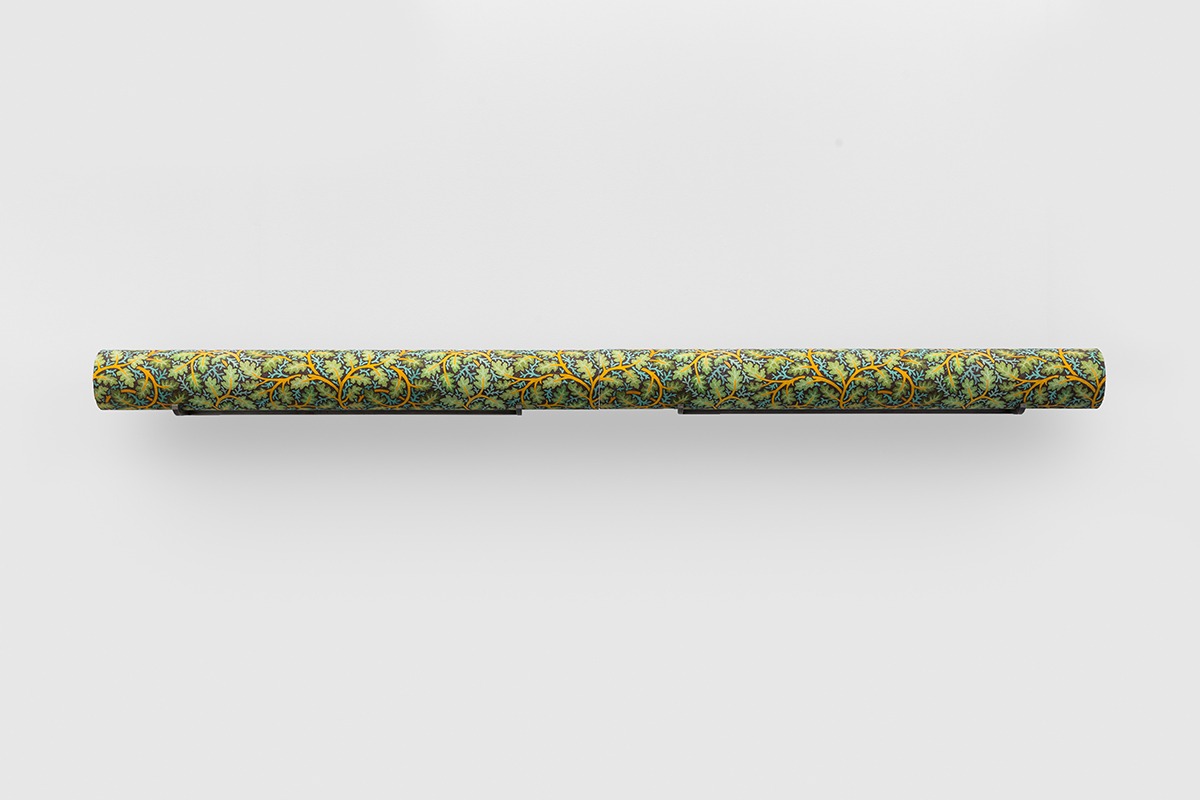
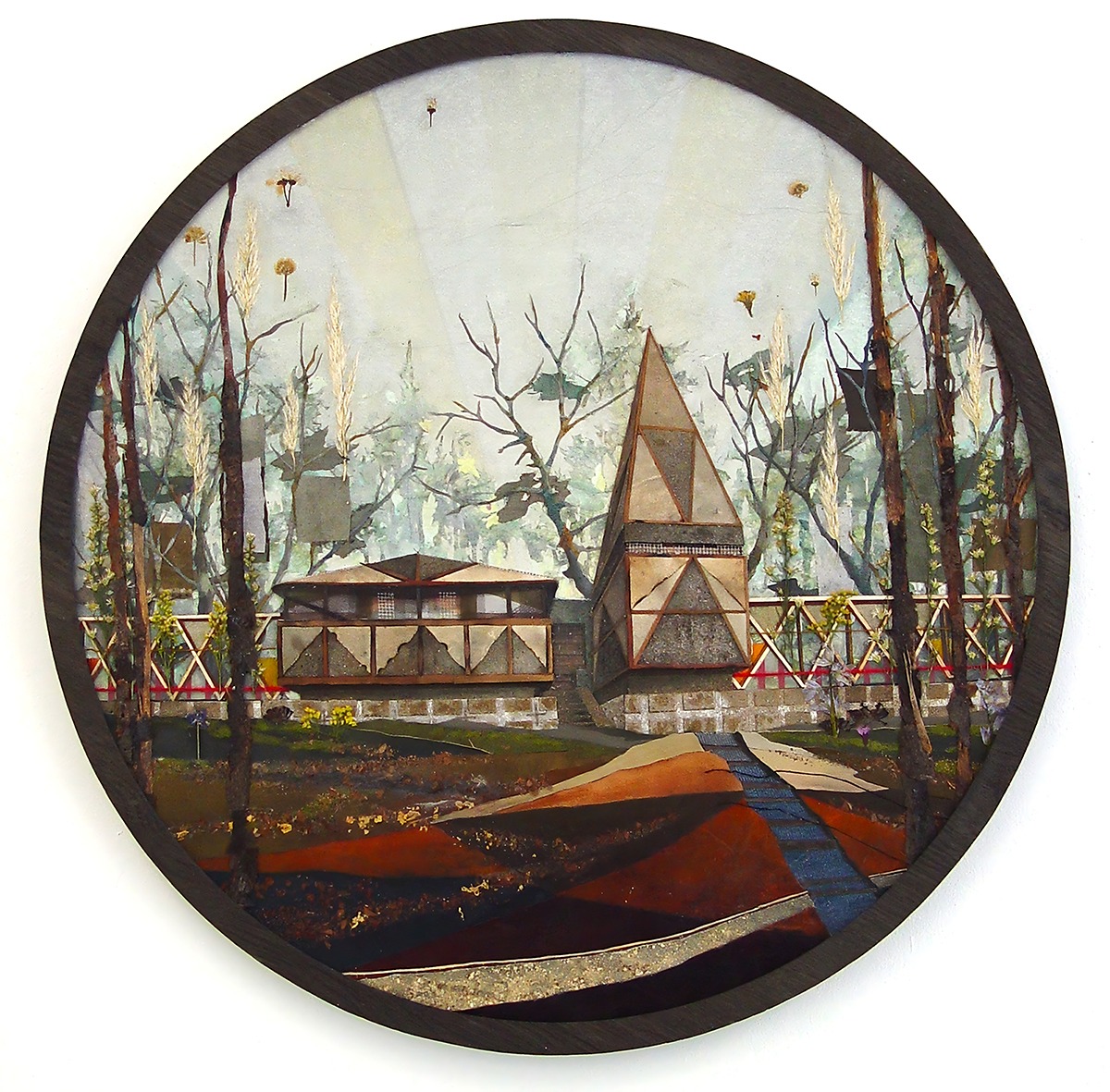
Art credit: David Thorpe, Joyous Underground, 2018. Shared labor, time, earth, coal, dried clay, hay, sand, pigment, chalk, gum arabic, plant resin, casein, paper and bone glue. 254 × 15.6 × 15.6 cm. Photo by Bruno Lopes. David Thorpe, The Colonist, 2004. Mixed media, collage. 83 cm (ø). Courtesy of the artist and Pedro Cera Gallery (Lisbon/Madrid).