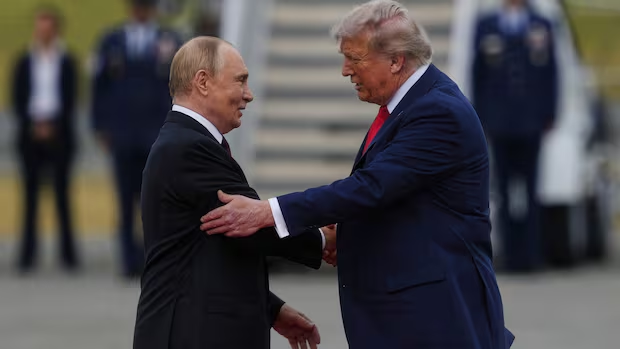
The treaty between the U.S. and Russia limiting their deployment of strategic nuclear weapons has expired, leaving plenty of questions about what U.S. President Donald Trump and Russian President Vladimir Putin intend to do next.
The expiration of New START — the latest in a series of nuclear weaponry limitation deals between Washington and Moscow dating back to 1972 — means that for the first time in more than 50 years, no formal agreement is, in effect, capping the size of the world’s two largest nuclear arsenals.
While experts disagree on whether the treaty’s end will kick off a new nuclear arms race, there’s broad consensus that the deal needs significant updating to reflect current nuclear realities, including the growth of China’s weapons program.
Yet the hope that Trump, Putin and China’s president, Xi Jinping, will agree on such an update quickly appears idealistic at best.
Thomas Countryman, a former U.S. diplomat who served as acting under-secretary of state for arms control and international security, says the risk that a nuclear weapon could be used in an attack is now the highest it’s been since the Cuban Missile Crisis of 1962.
“That’s why we watch with alarm as this treaty expires,” Countryman told CBC Radio’s The Current.

Under the now-expired treaty, the U.S. and Russia agreed to deploy no more than 1,550 nuclear warheads each and to cap their deployments of intercontinental and submarine-launched ballistic missiles and launchers.
Last August, in the run-up to his summit with Trump in Alaska, Putin dangled the idea of renewing the treaty, a proposal that never came to fruition.
Trump wants ‘new, improved, modernized treaty’
The treaty was by then partially undercut anyway: In 2023, Russia suspended its adherence to the agreement’s terms in retaliation for the Biden administration’s support of Ukraine.
Trump recently brushed off the significance of the treaty’s looming expiration, insisting he can get a better agreement in place.
On Thursday, he described New START as “a badly negotiated deal” in a social media post.
“The president wants to have our nuclear experts work on a new, improved and modernized treaty that can last long into the future, and that’s what the United States will continue to discuss with the Russians,” White House Press Secretary Karoline Leavitt told reporters on Thursday.

U.S. Secretary of State Marco Rubio is also downplaying the treaty’s expiration and emphasizing the need for bringing in China.
“The president’s been clear in the past that in order to have true arms control in the 21st century, it’s impossible to do something that doesn’t include China because of their vast and rapidly growing stockpile,” Rubio told reporters in Washington on Wednesday.
China on track for 1,000 nuclear warheads: Pentagon
China is undergoing a “massive nuclear expansion” that puts it on course to boost its current arsenal of roughly 600 nuclear warheads to more than 1,000 by 2030, according to a Pentagon report to Congress in December.
Jim Walsh, a senior research associate at the Massachusetts Institute of Technology’s Security Studies Program, can’t see how letting the U.S.-Russia treaty die will help constrain China’s nuclear buildup.
“It takes a lot longer to negotiate a treaty — sometimes years — than it does to rip it up, which only takes minutes,” Walsh told CBC News.
“We’re going to miss this bit of restraint, not today or tomorrow, but it’s going to happen, and when it happens, we’ll regret the day we threw this away.”
The U.S. and Russia are working toward a deal on continuing to observe New START’s weapon limits without a formal extension of the treaty, news outlet Axios reported Thursday.
Regardless of any such deal, Walsh says, there’s still a lot of uncertainty about what happens now that the treaty has officially expired.
“We’re on the cusp of entering a different world, likely a more tumultuous world,” he said.
Rose Gottemoeller, who was the Obama administration’s chief negotiator for New START in the run-up to its signing in 2010, told a hearing on Capitol Hill this week that the treaty is no longer the “be-all and end-all” of nuclear agreements and that she applauds Trump’s goal of negotiating something better.
The U.S. “must address the Chinese nuclear buildup. It will be a long-running challenge in the 21st century,” Gottemoeller told the Senate Committee on Armed Services.
“The Chinese are fiercely reluctant to engage the issue, not wanting to limit or reduce their nuclear forces until an uncertain point in the future.”
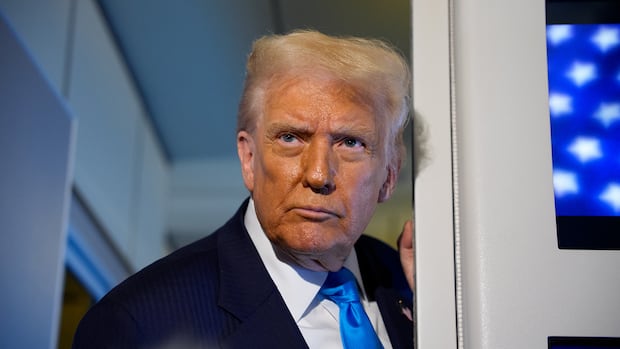
Trump ordered the resumption of nuclear weapons tests for the first time since 1992. A day earlier, Putin said Russia had successfully tested a nuclear-powered super torpedo.
China either wants to build its supply of nuclear warheads up to the levels of the U.S. and Russia or wait for the two bigger nuclear superpowers to shrink their arsenals to China’s levels, she said.
However, Gottemoeller also told the senators that a one-year extension of the treaty with Russia would not prevent the U.S. from responding to the Chinese nuclear build-up.
She argued an extension would buy the U.S. time without what she called the “added challenge” of Russia increasing its deployed arsenal beyond the treaty’s limits.
Kremlin spokesperson Dmitry Peskov said Thursday the treaty’s expiration was discussed in a call between Putin and Xi the previous day.
“What happens next depends on how events unfold,” Peskov told Reuters.
“The Russian Federation will maintain its responsible and attentive approach to the issue of strategic stability in the field of nuclear weapons and, of course, as always, will be guided first and foremost by its national interests.”