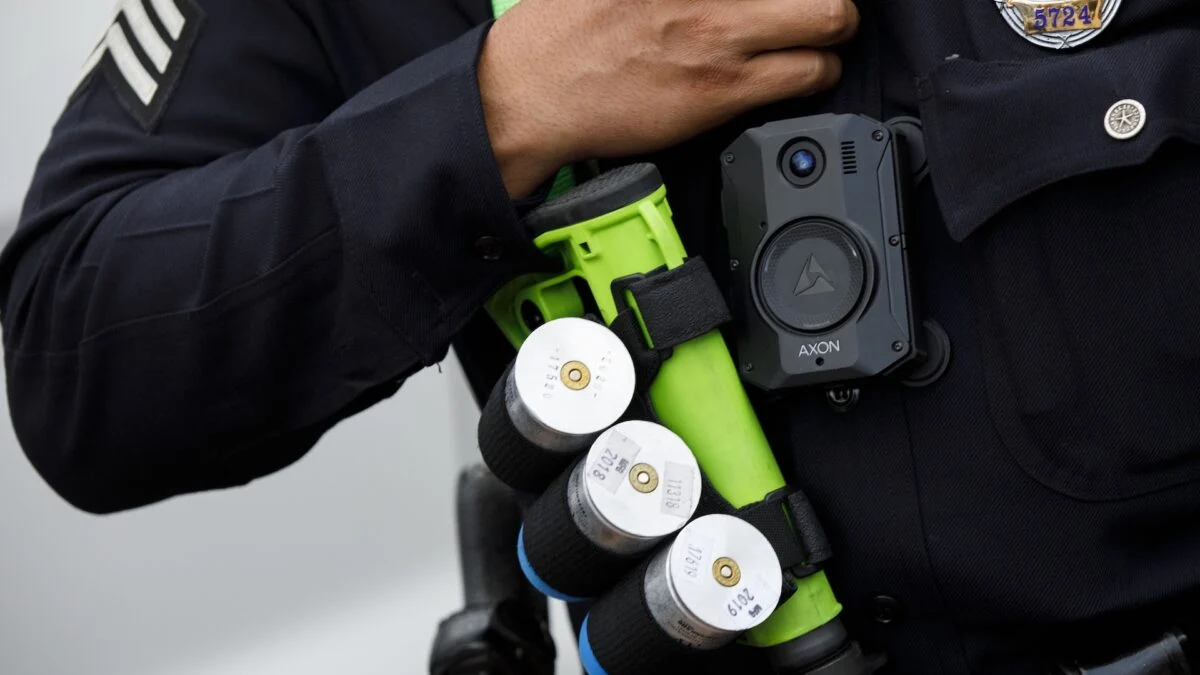
In the mid-2010s, police body cameras started to become mainstream in the U.S., with almost half of police departments adopting them by 2016. But the technology came with a steep learning curve for the officers involved. Cops started getting caught planting drugs by their own cameras. And it all happened because they didn’t understand how the body cams actually worked.
The flurry of cops getting caught on camera while planting drugs was relatively brief, with a spate of cases from 2016 to 2018. But it’s perhaps worth revisiting this unique period in recent American history as we discuss whether federal agents should be required to wear body cams as they terrorize communities in Minnesota.
It feels especially relevant as the U.S. Department of Homeland Security routinely lies with impunity about incidents where its officers have shot and killed people, even though the incidents have been captured on video from sometimes half a dozen angles.
Why did cops get caught in 2017?
The most frequent reason cops were caught by their own body cameras in the mid-2010s is that police didn’t understand when the camera would start recording.
The cameras worked by constantly recording even before the “record” button was pressed, periodically deleting any footage that hadn’t been intentionally recorded. Once the “record” button was pressed by the officer, it would capture the 30 seconds before the button had been pressed, thanks to this method of constantly being on standby.
But it was a hard concept for cops to understand. They weren’t being properly trained on the fact that their own cameras didn’t start recording once they pressed record. Hitting that button saved the 30 seconds prior as well, a neat feature that really bit them in the ass.
Cops planting drugs in Baltimore (Jan. 2017)
In Nov. 2017, footage was released showing an officer with the Baltimore Police Department searching through garbage in a backyard and finding a bag of heroin tucked away in a soup can. The footage was from January 24 of that year, and just thirty seconds before the officer found it, video from the same body camera showed the cop planting the drugs.
The officer, identified as Richard Pinheiro, returned a short while later as though he had just stumbled upon it. And it was all captured on his own camera. But not quickly enough. The man who was wrongfully hit with charges related to the heroin spent six months in jail.
According to an NBC report from the time, the Baltimore Police Department had one of the largest body cam programs in the country. They were billed as a way to increase transparency in the wake of Freddie Gray’s death in 2015 after he sustained fatal injuries from Baltimore cops while being transported in a police van.
Richard Pinheiro was found guilty of a misdemeanor charge of fabricating evidence in 2018 and received a three-year suspended sentence and two years of supervised probation, according to the Baltimore Sun.
Pinheiro’s drug planting incident in 2017 and subsequent media publicity prompted a review of over 100 cases in Baltimore. And that review turned up another incident that was clear as day from a cop’s own body camera. Oddly enough, the incident was even older.
Cops planting drugs in Baltimore. Again. (Nov. 2016)
That earlier review of footage brought to light an incident from Nov. 2016 where several different officers from Baltimore were placing drugs in a car.
An initial search of the car didn’t turn up any drugs. But the officers turned off their body cams, and when one of them turned the camera back on, the officer who was crouched down planting drugs didn’t know they were being filmed.
CBS Mornings reported that it was about 30 seconds before they “found” the drugs, another indication that the officer didn’t know when the footage being recorded would be saved.
Cops planting drugs in Los Angeles (April 2017)
In Los Angeles, yet another incident happened in April 2017, where a police officer could be seen planting drugs.
CBS 2 in L.A. reported that the officer picked up some cocaine and placed it in a suspect’s wallet. The news outlet explained: “After allegedly putting the drugs in the wallet, it appears the LAPD officer activated the recording on his camera. But the previous 30 seconds is automatically saved.”
Again, it appears that cops of 2017 just didn’t understand how their technology worked.
The Florida cop who tried to trick his camera (2017-18)
Not every cop who planted drugs during this time period was unaware of how their cameras worked. Some of them tried to deceive their own cameras and still got caught.
Florida sheriff’s deputy Zachary Wester was sentenced to 12 years in prison back in 2021 after being convicted of planting drugs on suspects in 2017 and 2018. Wester used many tactics to conceal the fact that he was planting drugs, including contorting his body in ways that covered the camera, like in one instance when he pushed his chest against a car seat to cover it up while he planted drugs.
In one of the clearest videos that shows how he planted drugs, Wester can be seen with a baggie of meth in his palm, however briefly, while searching a woman’s truck. Wester pulled over Teresa Odom for a defective brake light in Feb. 2018, and Odom agreed to a search of her vehicle. The bodycam is pointed away when he actually lets go of the drugs, and Odom obviously denied the drugs were hers when confronted with the “evidence.”
Odom wound up pleading no contest to the drug charge and received four years’ probation. It’s not uncommon for innocent defendants to plead guilty or no contest out of fear that they’ll receive harsher sentences if they maintain their innocence.
Wester, who was accused of planting drugs in at least a dozen vehicles, would turn off his body cam in order to conceal his crimes. And that would seem to become much more common in the following years.
Planting marijuana in New York? (March 2018)
By 2018, it seems like cases where officers were accused of planting drugs were harder to prosecute because the cops would frequently turn off their cameras in the middle of searches.
An officer in Staten Island, New York, was accused of planting drugs in incidents from 2018, as the Intercept reported in 2020. The New York Times characterized the video as “not conclusive” because one of the officers, Kyle Erickson, turned off his camera in the middle of the stop. But it was “problematic” enough that charges were dropped against the suspect.
And that gets to one of the main criticisms of body cameras and their use here in the 2020s. Cops pretty universally know that pushing the button means their previous actions from at least 30 seconds earlier will be recorded. And if they want to just turn off the camera or obscure it in some way, that’s also frequently an option.
The Democrats want ICE to wear body cams
Democratic leadership in Congress is currently trying to negotiate a deal with Republicans for DHS funding. Rep. Hakeem Jeffries and Sen. Chuck Schumer have presented a list that includes requests that ICE and other federal agents not wear masks (except in special circumstances) and wear body cameras.
But DHS has preemptively said it is deploying body cams to Minnesota as it continues to occupy the state and terrorize its residents in the name of “immigration enforcement.” And it’s probably a bad sign when DHS just goes ahead and does the thing Democrats have asked for without any real pressure.
DHS might be more than happy to wear cameras because they know video won’t actually bring justice to the rogue agency’s victims. The agent who shot Renee Good in Minneapolis last month recorded the killing with his own cameraphone and leaked the footage to a right-wing outlet. And the killing of Alex Pretti, not long after Good’s death, was captured from multiple angles.
There’s reportedly body camera footage from the officers involved in Pretti’s death. The catch? DHS has not released that video, and there’s no requirement for the agency to do so. It doesn’t really matter if you get cops to wear body cams if they have the power over what gets released. Obviously, the Trump regime is going to distribute any potential footage it finds exculpatory and withhold any footage that may be damaging. That’s a problem that some minor policy adjustments can’t fix.