
Listen to this article
Estimated 4 minutes
The audio version of this article is generated by AI-based technology. Mispronunciations can occur. We are working with our partners to continually review and improve the results.
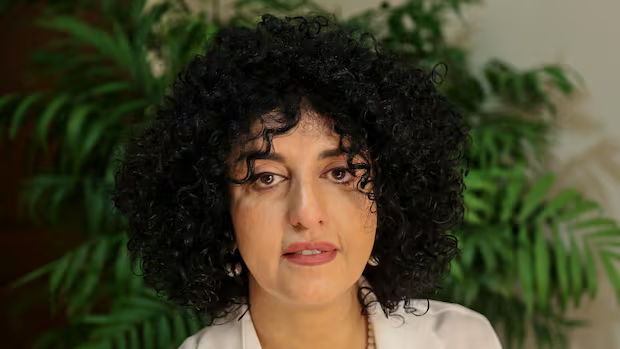
Iran sentenced Nobel Peace Prize laureate Narges Mohammadi to over seven more years in prison after she began a hunger strike, supporters said on Sunday, as Tehran cracks down on all dissent following nationwide protests and the deaths of thousands at the hands of security forces.
The new convictions against Mohammadi come as Iran tries to negotiate with the United States over its nuclear program to avert a threatened military strike by U.S. President Donald Trump. Iran’s top diplomat insisted on Sunday that Tehran’s strength came from its ability to “say no to the great powers,” striking a maximalist position just after negotiations in Oman with the U.S.
Mohammadi’s supporters cited her lawyer, who spoke to her. The lawyer, Mostafa Nili, confirmed the sentence on social media platform X, saying it had been handed down on Saturday by a Revolutionary Court in the city of Mashhad. Such courts typically issue verdicts with little or no opportunity for defendants to contest their charges.
“She has been sentenced to six years in prison for ‘gathering and collusion’ and one and a half years for propaganda and two-year travel ban,” Nili wrote. She received another two years of internal exile to the city of Khosf, some 740 kilometres southeast of the capital Tehran, the lawyer said.
Iran did not immediately acknowledge the sentence. Supporters say Mohammadi has been on a hunger strike since Feb. 2. She had been arrested in December at a ceremony honouring Khosrow Alikordi, a 46-year-old Iranian lawyer and human rights advocate who had been based in Mashhad, where he died on Dec. 6. Footage from the demonstration showed her shouting, demanding justice for Alikordi and others.
Mohammadi a symbol for Iranian activists
Supporters had warned for months before her December arrest that Mohammadi, 53, was at risk of being put back into prison after she received a furlough in December 2024 over medical concerns.
While that was to last only three weeks, Mohammadi’s time out of prison lengthened, possibly as activists and Western powers pushed Iran to keep her free. She remained out even during the 12-day war in June between Iran and Israel.
Mohammadi still kept up her activism with public protests and international media appearances, including even demonstrating at one point in front of Tehran’s notorious Evin prison, where she had been held.
Mohammadi had been serving 13 years and nine months on charges of collusion against state security and propaganda against Iran’s government. She had also backed the nationwide protests sparked by the 2022 death of Mahsa Amini, which have seen women openly defy the government by not wearing the hijab.

The children of imprisoned Iranian women’s rights activist Narges Mohammadi accepted the Nobel Peace Prize on her behalf Sunday. They read from a defiant letter Mohammadi smuggled out of her prison cell, calling for resistance to the regime to continue.
Mohammadi suffered multiple heart attacks while imprisoned before undergoing emergency surgery in 2022, her supporters say. Her lawyer in late 2024 revealed doctors had found a bone lesion that they feared could be cancerous and was later removed.
“Considering her illnesses, it is expected that she will be temporarily released on bail so that she can receive treatment,” Nili wrote.
However, Iranian officials have been signalling a harder line against all dissent since the demonstrations. Speaking on Sunday, Iranian judiciary chief Gholamhossein Mohseni-Ejei made comments suggesting that harsh prison sentences awaited many.
“Look at some individuals who once were with the revolution and accompanied the revolution,” he said. “Today, what they are saying, what they are writing, what statements they issue, they are unfortunate, they are forlorn [and] they will face damage.”