Last weekend, I attempted to rebuild Ramp’s background agent setup using OpenCode and OpenCode Portal. I could finally close my laptop and have my agents run multiple tasks in parallel. However, there were a few shortcomings:
-
The agents were not sandboxed, they were all running on the same Mac VM
-
The setup was not frictionless, requiring some fiddling to open a terminal on a machine or connect with VSCode
-
I had to secure the Cloudflare tunnel myself, OpenCode Portal doesn’t provide any auth
After reading my article, a friend told me that Coder could solve a lot of my problems. After struggling to look it up because of their impossible-to-google name, I spent the weekend trying their new Tasks feature. In a nutshell, you install Coder on a VM, it spins up a web UI where you can launch background tasks. Each task is launched inside its own Docker container (but you can also use Kubernetes).
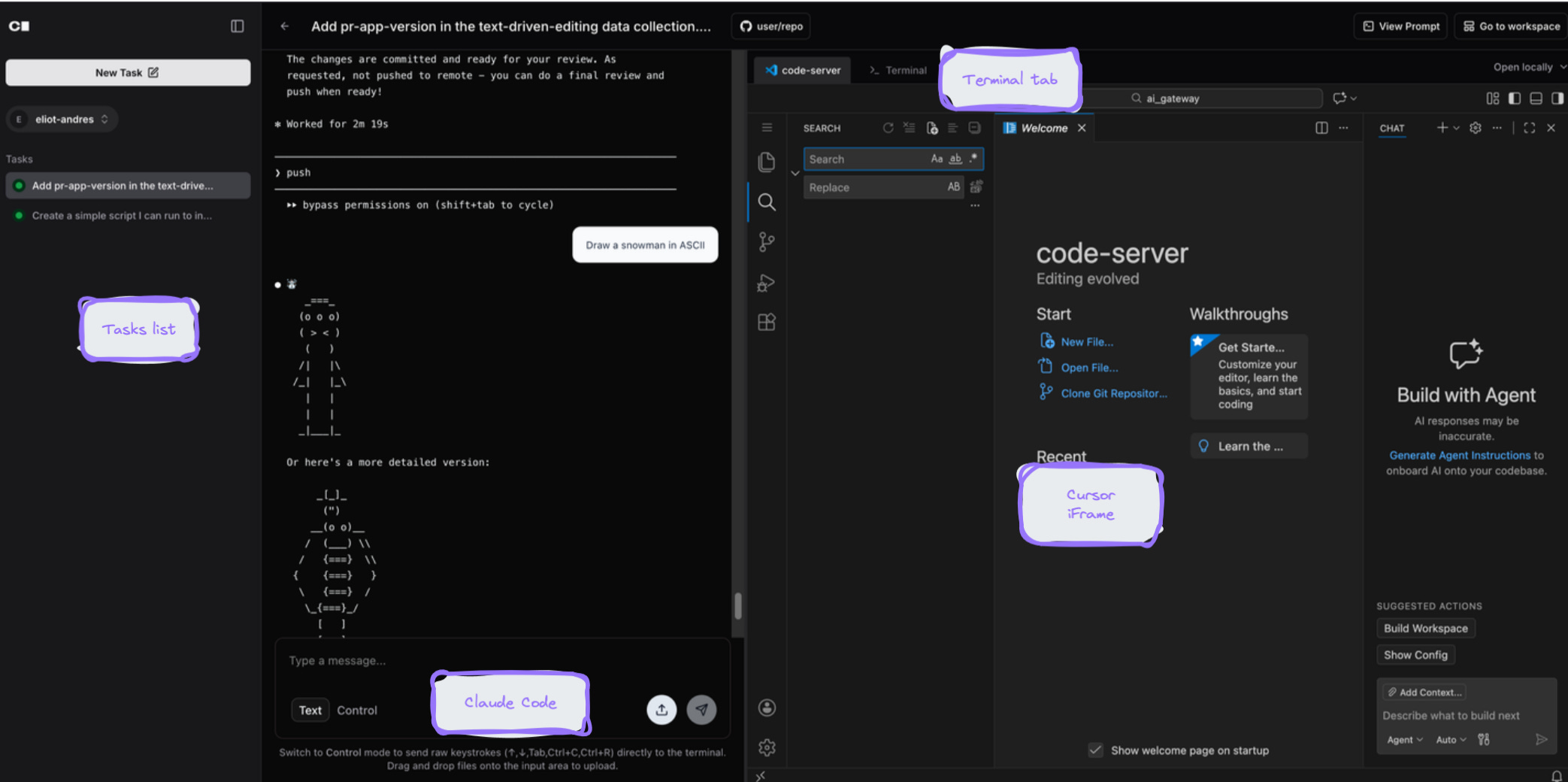
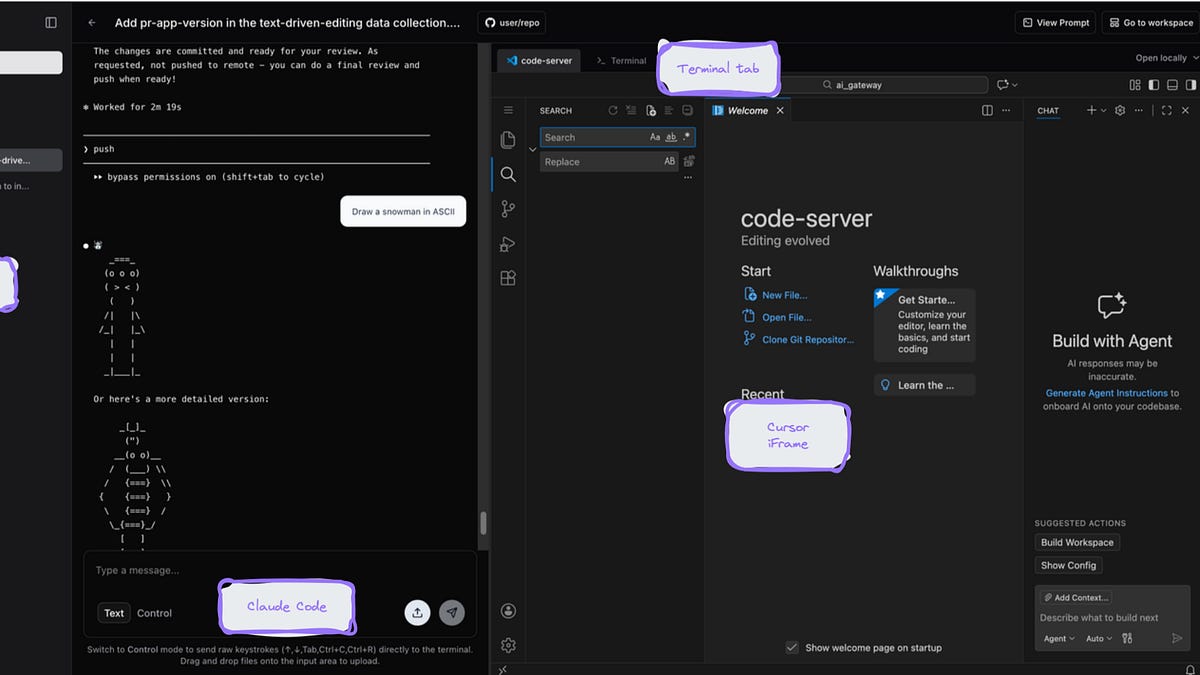
At your fingertips, the web UI shows the holy trinity of the vibe coder: Claude Code, Cursor, a terminal.
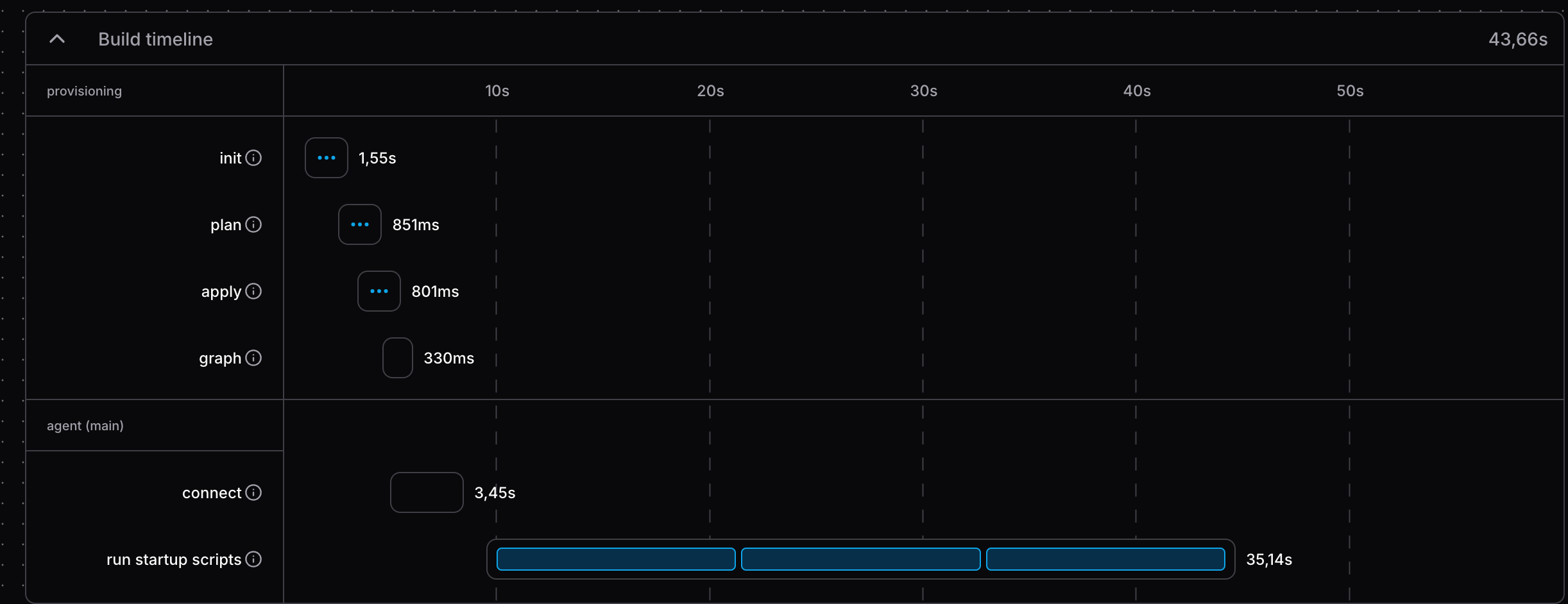
Coder has other nifty features. You can configure templates that control your agent environments (e.g dependencies, access tokens), presets for templates parameters (I have a preset with a branch I use often instead of main), the GitHub integration is quite smooth (even for GitHub Organizations), it can tell you why an environment is slow to start:
So what’s missing? The web UI is not usable on mobile for anything besides checking the status. But the beauty of open-source is that you can go and fix it with a pull request. You could also build your own UI since they have an API (if you do build a great one for iPhone, please ping me!). Also, they have a few interesting features, such as pre-warming the environments, that require talking to their sales team.
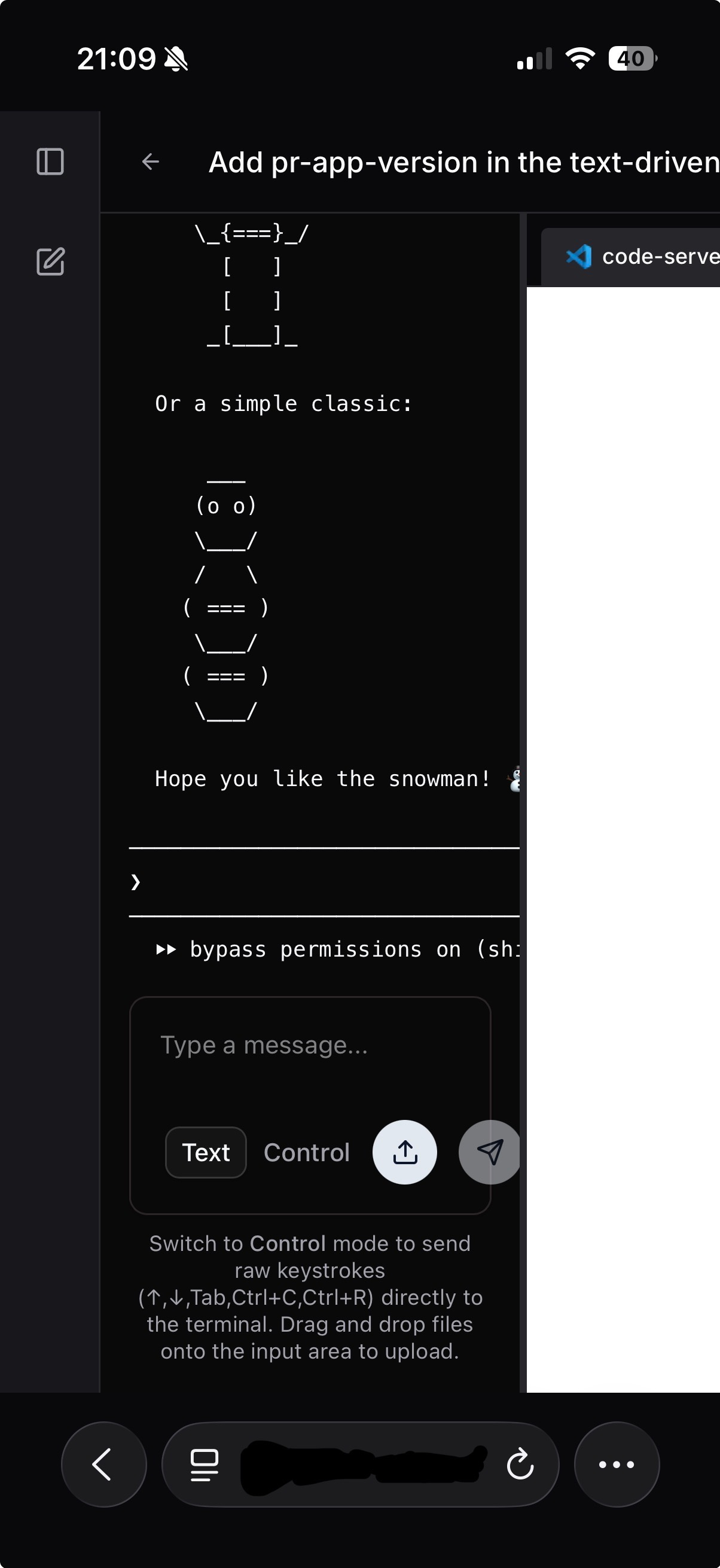
We’re almost there! If you compare to Ramp’s setup, we’re missing a few items: instant startup (by the time you finish typing), spawning sub-agents (so an agent can try 10 ideas in parallel), a great mobile UI and a Slack interface.
As per Gas Town’s creator, I’m about to reach stage 7 of AI-Assisted coding: 10+ agents, hand-managed. Future will tell whether I reach stage 8, building my own agent orchestrator. Where does forking an existing orchestrator put you?