“Happiness—actually, unhappiness—is the crisis of our time.” So wrote acclaimed professor, author, and happiness expert Arthur Brooks in his inaugural column for The Free Press last month. Every week since, Arthur has taken on some of the biggest questions behind our collective crisis of meaning, from the limits of modern therapy to what the Beckham drama exposes about the tragedy of family estrangement. His column drops every Monday.
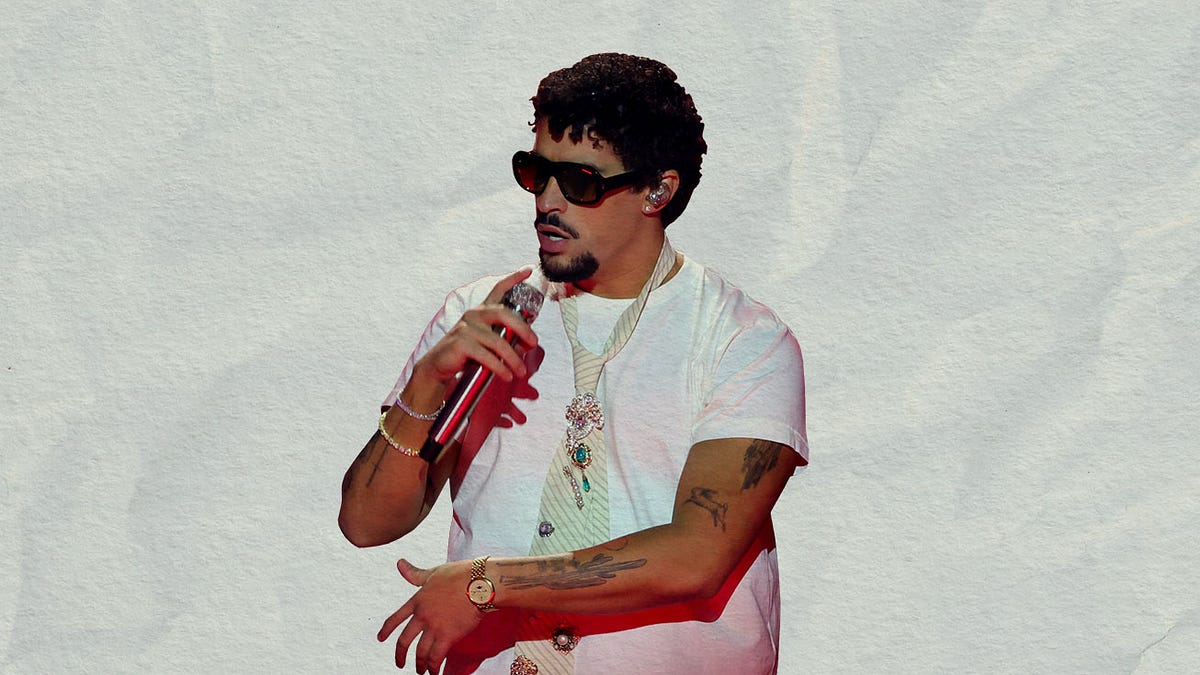
Except this week! This week, his column is arriving a day early. That’s for a good reason. Tonight, Bad Bunny will be the first Super Bowl halftime performer to deliver a set entirely in Spanish—a choice that has stirred controversy in some circles. Naturally, we thought: Who better to weigh in than a man who’s been married for 34 years to a Spanish woman who spoke no English when they first met? Read on as Arthur reflects on how language—and the barriers it creates—can challenge, enrich, and shape what it means to live a good life.
In addition to his Monday column, Arthur’s free newsletter publishes every Friday. To get both delivered straight to your inbox, sign up here.
Happy Super Bowl Sunday. —The Editors

Super Bowl XXVII in 1993 was a lousy blowout of a game. The Cowboys beat the Bills 52-17, and it was never close. For my wife, however, it was utterly epic. We had just moved to the United States from Spain, where she’d lived her whole life and I’d spent three years as an expat. New friends invited us to a rowdy party to watch the game. We ate and drank and cheered, and at one point, someone accidentally set off the fire alarm. (It was me.) The lavish halftime show featured Michael Jackson.
My wife spoke very limited English at the time and had no idea what the rules of American football were. To her, it looked like complete chaos. But she still talks about the Super Bowl as one of her happiest early memories living in the country that, as a now naturalized citizen, she loves deeply.
Fast-forward to Super Bowl LX, which takes place Sunday night in Santa Clara, California—and which I, as a Seattle native, very much hope will be a lousy blowout for the Seahawks. The halftime show will feature Benito Antonio Martínez Ocasio—a.k.a. Bad Bunny—the hugely popular Puerto Rican rapper, who performs exclusively in Spanish. Like everything in life these days, this has turned into a political controversy: Some conservatives have denounced his appearance as a politically motivated diversity sop, because most American football fans don’t speak Spanish.
This is exactly the wrong interpretation of events. In fact, as my patriotic wife would argue, Bad Bunny’s exclusively Spanish performance will be a purely and authentically American phenomenon—and a testament to what most U.S. traditionalists should want: the undimmed power of American culture to bring people together across ethnicities through entertainment. At a time when activists on both sides would prefer we tear one another apart based on grievance and victimization, what could be truer to our national spirit than that?
But there is a deeper question here: Can humans connect with each other across language barriers? And how do these barriers shape the perspectives and relationships that underlie our lives?