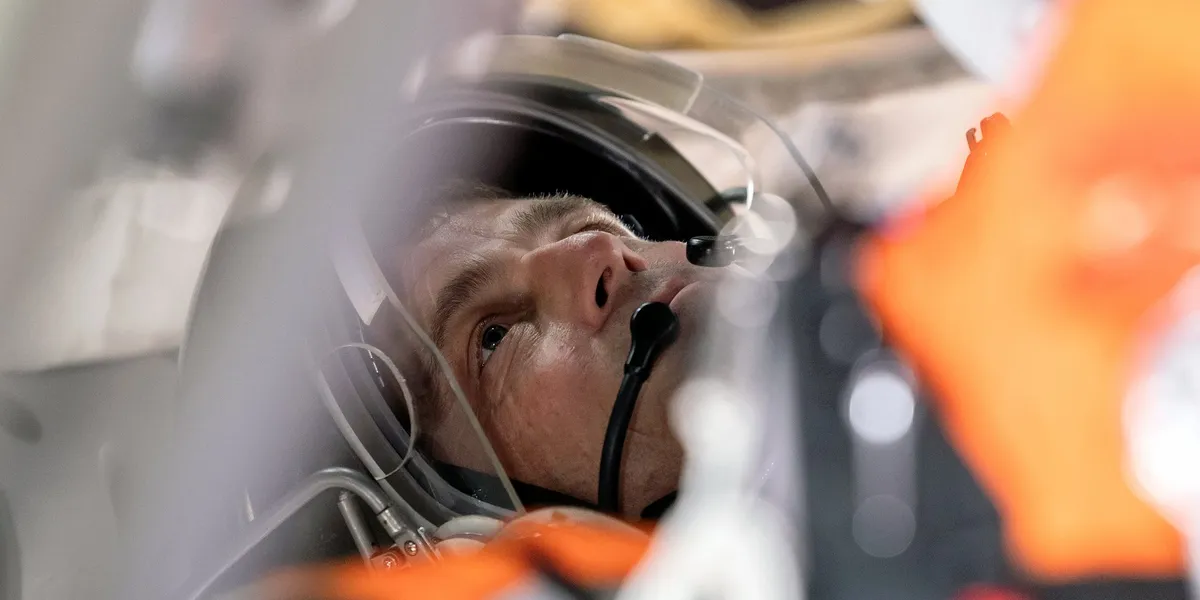
Artemis, depending on whom you ask, is NASA’s bid to reclaim its heritage, to resume the business of human exploration, to take astronauts to the moon and beyond and win what’s been billed by some U.S. politicians as the “new space race” with China. Artemis II, the project’s first circumlunar test mission with a crew, is now preparing for launch, perhaps in March. If it succeeds, and if NASA can deliver on an 18 December executive order from the Trump administration, Artemis astronauts will land near the moon’s south pole by 2028 and start building a lunar outpost by 2030, steps to “ensuring American space superiority.”
But there are influential voices in the American space community who warn that unless things change quickly, the race has already been lost.
“We cannot control what China is doing,” said Michael Griffin in congressional testimony in December of last year. He was NASA administrator from 2005 to 2009, when the agency began assembling the hardware for what is now Artemis. “We can only control what we are doing. Of those efforts, I am forced to say that mediocrity would be an improvement.”
“Look at the architecture that we have developed to land American astronauts on the moon,” said JIm Bridenstine in his own testimony in September. He was NASA administrator from 2018 to 2021, when Artemis was named as America’s new lunar venture. “It is extraordinarily complex.”
Other NASA veterans have expressed the same worry. They say Artemis, with its much-delayed Space Launch System rocket, Orion crew capsule, and—most critically—two competing, unproven lunar landers, is hobbled by its history of convoluted, meandering decision-making. They say it needs better organization, perhaps even a new landing ship, even at this late date.
Meanwhile, the Chinese space program claims it’s on track to a lunar landing by its stated goal of 2030. In Western eyes, China does not have superior technology or resources, but it’s been better at setting long-term goals and sticking to them.
“If we don’t do this, it’s not just ‘Oh, that’s too bad, China got to the moon first,’” says Lisa Porter, who worked with Griffin at NASA. (The two of them are now co-presidents of a management, scientific, and technology consulting firm, LogiQ.) “Now China gets to establish the standards for the future.”
The Origins of NASA’s Artemis Program
Artemis rose from the ashes of the space shuttle Columbia disaster. After the shuttle disintegrated upon reentry in 2003, President George W. Bush outlined a “Vision for Space Exploration.”
NASA’s current moon effort, in other words, is finally launching astronauts after two decades of work. By 2005, with Griffin in charge, the agency laid out a program called Constellation, whose components included a conical capsule called the Crew Exploration Vehicle (later Orion) and a big rust-colored rocket called Ares V (later SLS). To speed development and save money, much of the hardware was repurposed from the shuttle program. The idea was to build on known technology. And there was no rush: At the time, Griffin said Constellation astronauts would walk on the moon by 2018.
 In 2006, NASA Administrator Michael Griffin (left) and Scott J. Horowitz, NASA’s associate administrator for exploration systems, detailed plans for the Constellation Program to return astronauts to the moon. Bill Ingalls/NASA
That plan lasted only until the Bush administration was succeeded by Barack Obama’s—and at every juncture after that, an already-complicated project became even more so. With costs growing and deadlines being pushed back, the Obama White House canceled Constellation in 2010. The U.S. Senate, worried about jobs, un-canceled the launch rocket and the crew capsule, but it became a rocket without a destination. The Obama administration suggested going to a near-Earth asteroid. The Trump White House restored the moon as a goal in 2017, but by then the Orion spacecraft no longer had an engine powerful enough to put astronauts in a low lunar orbit, and work on a lunar landing ship, then called Altair, had been stopped.
“There’s a regrettable history in this country,” says Griffin now, “of, whenever possible, a new administration wants to discontinue what was being done before and do something new. Sometimes that’s good and sometimes it’s not.”
Industry’s Role in NASA’s Lunar Ambitions
There has been a sea change, in the meantime, in how the American space effort does business. No longer does NASA try to run every program itself; where possible, it lets industry manage them, with the government as a “customer.”
Proponents say it works great: Companies, competing for NASA’s business, have incentive to move faster and be more creative. Costs drop, sometimes so dramatically that NASA can afford to hire two companies for a job in case one runs into trouble. But it’s become messy, at least so far, in the case of the HLS—the Human Landing System, the all-important spacecraft that would actually bring Artemis’s astronauts to the lunar surface.
In 2021 NASA awarded seed money to SpaceX, Elon Musk’s company, to adapt its giant Starship spacecraft as a lunar lander. Two years later, it made a second award, to Jeff Bezos’s Blue Origin, to build a lander for later Artemis flights. They were two aggressive companies, owned by two of the world’s wealthiest technologists.
But this is why all those NASA veterans are sounding the alarm. For one thing, neither Starship nor Blue Origin’s Blue Moon landers have so far proved themselves ready to carry astronauts. And, say Griffin and Porter, they are going to have a very difficult time even getting close.
 SpaceX says it is adapting its Starship spacecraft into a lunar lander variant for future Artemis missions.SpaceX
The showstopper, they say, is in the choice of propellants. For 60 years American spacecraft have mostly maneuvered in space with so-called hypergolics, like hydrazine and nitrogen tetroxide, that ignite on contact with each other to provide thrust. They’re highly toxic, but very reliable. SpaceX and Blue Origin both favor cryogenic fuels, like liquid hydrogen or liquid methane.
That makes great sense for the long term—cryogenic fuels have a much higher specific impulse, the amount of thrust per unit of propellant, than hypergolics, and someday they may even be made from water ice near the moon’s south pole—but to be kept liquid in a rocket’s fuel tank, they have to be hundreds of degrees below zero. Not an easy problem when the sun routinely heats orbiting spacecraft above 120 °C. To fill a moon-bound Starship with liquid methane, SpaceX proposed launching it into low Earth orbit, then sending a succession of other Starships to dock with it and tank it up. It would be an uphill battle, because the fuel just delivered would keep boiling off in the sun’s heat.
How many Starship launches would it take to fill the first ship? Four? Ten? Twenty? Nobody has ever tried large-scale refueling in orbit–much less with multiple launches of the largest rocket ever built. “It’s an odd choice from a program manager’s point of view to put an unproven technology in series with an operational mission,” says Griffin.
Can Simplifying Lunar Missions Lead to Success?
In a detailed paper sent to Congress, Griffin and Porter suggest that NASA call on industry to come up with a simpler, smaller landing ship, so that a moon landing mission could be done with just two launches, one for Orion and one for the lander.
Private industry is sharing in the increased urgency. Blue Origin announced at the end of January that it is stopping its short suborbital flights for space tourists so that it can “shift resources to further accelerate development of the company’s human lunar capabilities.” Lockheed Martin, which builds Orion, has said it was working with other companies on a lander that the company privately proposed to be built largely with existing components. And SpaceX, in October, posted an online update: “We’ve shared and are formally assessing a simplified mission architecture and concept of operations that we believe will result in a faster return to the moon…” SpaceX and Blue Origin did not reply to requests for interviews.
Management of all this now falls to Jared Isaacman, newly installed as NASA’s chief. At a Senate hearing on 3 December, he called himself an advocate of competition. “I think the best thing for SpaceX is a Blue Origin right on their heels and vice versa.” And he took it a step further: “I think competition among world powers is actually a really good thing, just as long as we don’t lose.”
What are the odds? Lisa Porter, for one, says she’s concerned, and hopes the United States will see its space plans as a national priority.
“This country has shown,” she says, “that when we feel an existential threat, we can do incredible things.”
This is part 3 of a three-part series, Back to the Moon. Part 1 is about the technology behind NASA’s Artemis II mission. Part 2 looks at China’s lunar ambitions.
From Your Site Articles
Related Articles Around the Web