Opinion

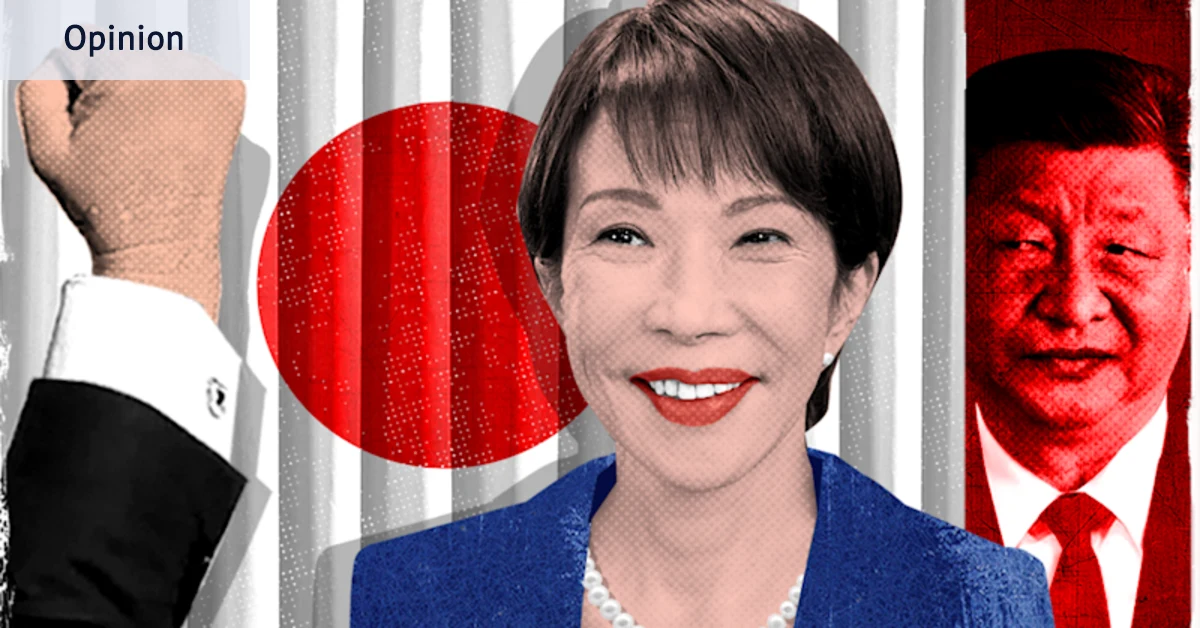
A geopolitical earthquake has struck the north-west Pacific. Its name is Takaichi. Japan’s first female prime minister has just triumphed in a general election in which she won more seats than any prime minister since World War II, either in proportional terms or absolute numbers.
Sanae Takaichi has won a so-called super-majority of Japan’s lower house, or two-thirds majority, which gives her power to overrule the upper, to make law with a free hand, to launch the process towards a rewriting of Japan’s pacifist Constitution if she so chooses. And she did it almost single-handedly.
“It’s a stunning result,” remarks Yoichi Kato, a scholar with Waseda University’s Institute of Asia-Pacific Studies and formerly a political correspondent for Japan’s nationwide newspaper, the Asahi Shimbun. “This enormous victory is a reflection of her personal popularity, not necessarily support for the Liberal Democratic Party.”
The centre-right LDP has ruled Japan for almost the entire postwar era, but its parliamentary numbers have been in continuous decline for the past dozen years. “We stand at a crossroads that will profoundly transform our nation,” Takaichi said on Saturday, on the eve of polling day.
Since Japan’s “bubble economy” burst in 1989, it’s been largely overlooked as a force. It suffered long economic stagnation and political drift. But Japan is a nation capable of rapid transformation.
Through an exertion of political will, the Meiji Restoration of 1868 transformed a poor, feudal, agrarian country into a wealthy, modern, industrialised power in just one generation. Its military defeated China and then Russia in short order in the early 1900s.
“Takaichi doesn’t think Japan is a middle power, she thinks it’s a great power,” says Mike Green of the US Studies Centre at Sydney University, a long-time Japan expert who has known Takaichi since the 1980s.
It’s the world’s fourth-biggest economy, with deep pools of capital and technological expertise. “Japan’s defence spending is in the top five in the world and will probably surpass Britain’s to become No.1 among US allies,” says Green. Takaichi promises a revival of a strong economy and a powerful military. At the level of retail politics, she promises a two-year suspension of the 8 per cent consumption tax on food and offers more help for women, carers and families.
Japan desperately hopes for change and voted accordingly. Even if the people aren’t sure of exactly what changes they’ll be getting: “Japanese people feel a sense of deep frustration as they face stagnation in every field,” says Kato.
“Prices, including rise, are going up, while their wages are not. The economy is slow, society is ageing, population is shrinking; we are not looking at a very bright future. Takaichi has given Japan a sense of hope, even if it’s not well founded.”
“People are not really interested in finding the specifics of any policy area. They just wanted somebody who can give them a reason to be hopeful.” A celebrity cult surrounds her – “sanakatsu” or “sana-mania”, playing on her given name, Sanae. So her black leather bag and pink pen, for example, have become hot items to own for young women. “It’s shallow and emotional and lacks a reasoning foundation, but her followers don’t care,” explains Kato.
How much of her support is bound up in her achievement of smashing through Japan’s notoriously sexist traditions to become the first female prime minister? “She wasn’t elected leader of the LDP and therefore prime minister because she’s a woman,” points out Kato. She just played the intra-party power game better than her rivals.
The novelty of a female PM did promote the impression of breakthrough change, but the hope factor and her strength and outspoken personality were the dominant appeal.
“I don’t think she won because she’s a woman,” says Mike Green. “The fact that she won as a woman shows how much Japan has changed. She’s shown the Japanese people that she will fight for them.”
The scuba-diving enthusiast, former heavy metal drummer and car fanatic presents as a hard-driving personality who works non-stop. She has named Britain’s Margaret Thatcher as her inspiration, inviting the nickname of Japan’s “Iron Lady”.
Takaichi’s image of strength was reinforced inadvertently by China. “She won, in part, because China tried to destroy her,” observes Green. When she told the parliament in November that any Chinese attack on Taiwan could pose an “existential crisis for Japan” and so trigger Japan’s legal right to take military action in collective self-defence, crisis ensued. It was the first such clear declaration on Taiwan by a Japanese prime minister.
Beijing excoriated her and imposed punitive trade sanctions on Japan. She stood her ground; her approval rating, already high, rose higher. She plans to confront Xi Jinping, not kowtow to him. Her tough attitude and direct speech have proved to be a popular break from the typical Japanese leader’s wobbliness and waffling.
Mike Green says that her entrenchment in power “is a very, very big deal for Australia”.
“Albanese said he agreed with [Canadian Prime Minister] Mark Carney’s speech. That won’t be Takaichi’s tone. Carney talks about decoupling and hedging against the US; Takaichi talks about making Japan indispensable to the US.”
Donald Trump, who’s repeatedly praised her strength and grace, congratulated her on her win. She replied by writing: “The potential of our Alliance is LIMITLESS.” Green predicts that “she’ll be encouraging Australia to push Trump to get his act together on trade policy, economic security and engagement with South-East Asia.”
Takaichi will intensify the US relationship because Japan has no alternative, says Green: “In the 1980s and ’90s, Japan was on the front line with China. Now that China has enlarged the threat envelope, Japan is almost inside the front lines.”
She has put her people on notice that she will make hard decisions that they might not like: “She said repeatedly during the campaign that, securing a public mandate through election is essential to decisively pursue bold policies and reforms that could polarise national opinion, without fear of criticism,” relates Kato.
“She can now claim carte blanche. People will find out eventually what they’ve entrusted her with. It could amount to an historical achievement. It could also be devastating.”
An earthquake of historic proportions will rearrange a country. Devastation is always a risk.
Peter Hartcher is international editor.
Get a weekly wrap of views that will challenge, champion and inform your own. Sign up for our Opinion newsletter.
 Peter Hartcher is political editor and international editor of The Sydney Morning Herald and The Age.Connect via email.