
Listen to this article
Estimated 4 minutes
The audio version of this article is generated by AI-based technology. Mispronunciations can occur. We are working with our partners to continually review and improve the results.
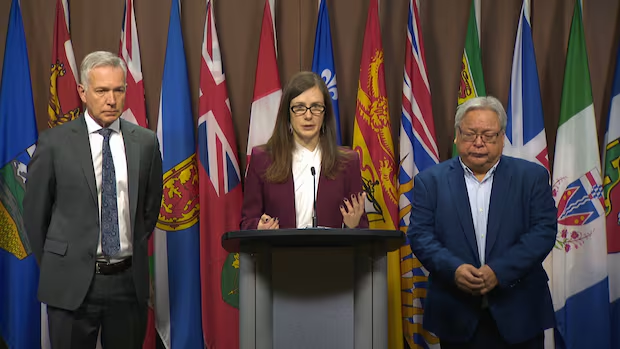
B.C.’s emergency minister, the mayor of Abbotsford and the chief of Sumas First Nation are in the nation’s capital this week, pushing for federal action to help solve the rising flood risk in the Sumas Prairie.
The group hopes to convince the federal ministers of emergency management and housing and infrastructure that if catastrophic flooding in the Fraser Valley continues, it will have national consequences for commerce, transportation and the environment.
“This is a foundational nation-building issue that needs to be fully understood,” Abbotsford Mayor Ross Siemens told CBC News from Ottawa on Wednesday.
It’s the latest advocacy by local and provincial politicians since destructive flooding struck the Sumas Prairie in 2021, a fertile area of land around 70 kilometres east of Vancouver that used to be a lake, and then again this past December.

“It was a painful echo of 2021, there is a lot of hurt in the community,” said B.C. Minister of Emergency Management and Climate Readiness Kelly Greene, speaking at a news conference with Siemens and Sumas First Nation Chief Dalton Silver in Ottawa Wednesday.
The trio is asking Ottawa to better engage in a plan to guard Sumas Prairie against future flooding, in addition to funding recovery efforts.
First Nation governments, local politicians and the province struck a roundtable in 2023 to devise a watershed flood mitigation plan for the area, but Greene said the only federal engagement in it so far has been one meeting where an observer from Ottawa participated.
“Their voice has been absent,” she said.
Greene, Siemens and Silver hope to convince the federal government — which is ushering in a new era of nation-building projects to create jobs and revenue and safeguard sovereignty — that the Sumas Prairie, as a transportation and energy corridor and agricultural powerhouse, is worth protecting.
“It’s perplexing why they’re not there,” said Greene about federal participation in the roundtable. “I’m here to seek a commitment to attend and be part of the process.”
“We’re here with the common interest of public safety and food security,” added Silver.
Since 2021, around 300 flood recovery projects have been mostly completed in the area.
Federal Minister of Emergency Management and Community Resilience Eleanor Olszewski told CBC News last December, following criticism in the wake of fresh flooding, that Ottawa has been working on the issue.
She said they modernized the Disaster Financial Assistance Arrangements (DFAA) program last spring and that mitigation strategies are now covered under it.
She also said the federal government had dispersed approximately $1 billion in reimbursements to the provincial government since the 2021 floods and she expected a further $4 billion would be paid out once claims are processed.

In November, as part of the federal budget, Ottawa announced its Build Communities Strong Fund, which includes $6 billion “to support regionally significant projects, large building retrofits, climate adaptation, or community infrastructure.”
Greene said flood mitigation projects in the Sumas Prairie shouldn’t have to compete with other regions for the funds, though.
“This particular region needs to be prioritized and have that direct connection to government,” she said.
Siemens and others also say the problem is not just about funding but transnational negotiation, as part of the flooding problem originates in the U.S. with Washington’s Nooksack river.
Greene said Olszewski is set to come to B.C. to meet with local leaders over the issue.
The B.C government says it’s spent $220 million in recovery, preparedness and mitigation funding for Abbotsford and Sumas Prairie since 2021.